

Spiritual & Existential Exploration
Signs You Are Wrestling
- The Integrity Gap: You have spiritual convictions, but they feel separate from your daily life. You want your faith to shape your decisions and relationships, not just exist as an abstract theory.
- Spiritual Homesickness: You are longing for connection with the sacred, but the paths you’ve tried feel empty, performative, or unsafe. You know there’s more, but you can’t seem to access it.
- The Meaning Crisis: Success, comfort, or achievement aren’t delivering what you expected. You keep asking “Is this it?” or “What’s the point?” and the standard answers; career advancement, material comfort, checking boxes; feel hollow.
- Unanswered Questions: Big questions about suffering, mortality, or purpose keep surfacing. You can’t ignore them, but you don’t know how to engage with them without spiraling.
- Spiritual Homesickness: You are longing for connection with the sacred, but the paths you’ve tried feel empty, performative, or unsafe. You know there’s more, but you can’t seem to access it.
- The Meaning Crisis: Success, comfort, or achievement aren’t delivering what you expected. You keep asking “Is this it?” or “What’s the point?” and the standard answers; career advancement, material comfort, checking boxes; feel hollow.
- Unanswered Questions: Big questions about suffering, mortality, or purpose keep surfacing. You can’t ignore them, but you don’t know how to engage with them without spiraling.
Why This Matters (And Why It's Hard)
- When Belief Systems Shift: You’re outgrowing old certainties, exploring new practices, or trying to reconcile faith with experiences that don’t fit the narrative you were given. The framework that once organized your world is cracking, and you need space to rebuild without losing yourself in the process.
- Developmental Transitions: Major life stages; becoming a parent, midlife reassessment, retirement, approaching mortality; force you to reckon with purpose and legacy. What mattered before might not be enough now, and you’re searching for what comes next.
- Crisis & Loss: When illness or grief shatters your previous understanding of how the world works, spiritual questions become urgent. Abstract theology meets lived experience, and you need a framework that holds both.
- The Loneliness of Depth: Most people don’t have spaces where they can voice doubts, wrestle with complexity, or explore spiritual questions without judgment. The questions themselves can feel isolating.
- When Belief Systems Shift: You’re outgrowing old certainties, exploring new practices, or trying to reconcile faith with experiences that don’t fit the narrative you were given. The framework that once organized your world is cracking, and you need space to rebuild without losing yourself in the process.
- Developmental Transitions: Major life stages; becoming a parent, midlife reassessment, retirement, approaching mortality; force you to reckon with purpose and legacy. What mattered before might not be enough now, and you’re searching for what comes next.
- Crisis & Loss: When illness or grief shatters your previous understanding of how the world works, spiritual questions become urgent. Abstract theology meets lived experience, and you need a framework that holds both.
- The Loneliness of Depth: Most people don’t have spaces where they can voice doubts, wrestle with complexity, or explore spiritual questions without judgment. The questions themselves can feel isolating.
These aren’t questions you can think your way out of. They require a different kind of work; one that integrates head, heart, and the willingness to sit with uncertainty.
My Approach: The Head and The Heart
1. Creating a “No-Apologetics” Zone We make room for the questions you’ve been afraid to voice. There is no pressure to reach certainty, perform faith, or defend your doubts. This is a place for wrestling, not performing.
- Translation: How does your worldview inform how you handle conflict, money, parenting, or anxiety?
- Building practices: Finding spiritual disciplines that actually connect you to the sacred, not just ones you think you “should” do
- Addressing barriers: We examine what gets in the way—shame, busyness, disconnection, fear, or religious trauma
3. Deepening & Transformation We explore what spiritual growth looks like for you, not what it’s supposed to look like according to someone else’s map. This might involve:
- Theological exploration: Examining questions about God, suffering, prayer, or doubt with both intellectual rigour and emotional honesty
- Contemplative practices: Learning or deepening practices like meditation, silence, sacred reading, or embodied prayer
- Holding tension: Developing the capacity to live with ambiguity, to hold paradox without collapsing it, and to find meaning even when clarity isn’t available
Note: I am not here to tell you what to believe. I am here to help you think deeply, feel honestly, and find your own authentic path forward.
1. Creating a “No-Apologetics” Zone We make room for the questions you’ve been afraid to voice. There is no pressure to reach certainty, perform faith, or defend your doubts. This is a place for wrestling, not performing.
2. Integration Work If there is a gap between what you believe and how you live, we bridge it.
- Translation: How does your worldview inform how you handle conflict, money, parenting, or anxiety?
- Building practices: Finding spiritual disciplines that actually connect you to the sacred, not just ones you think you “should” do
- Addressing barriers: We examine what gets in the way—shame, busyness, disconnection, fear, or religious trauma
- Theological exploration: Examining questions about God, suffering, prayer, or doubt with both intellectual rigour and emotional honesty
- Contemplative practices: Learning or deepening practices like meditation, silence, sacred reading, or embodied prayer
- Holding tension: Developing the capacity to live with ambiguity, to hold paradox without collapsing it, and to find meaning even when clarity isn’t available
Note: I am not here to tell you what to believe. I am here to help you think deeply, feel honestly, and find your own authentic path forward.
Ready to Sit With the Big Questions?
When life loses its meaning, the search itself becomes the work. Let's explore together.
$150 per 50-minute session - Insurance billing available
What You Can Expect
This work is less about reaching a final "answer" and more about developing the capacity to engage with life's deepest questions without fear.
Integration
Some sessions will feel philosophical or theological. Others will touch on grief, longing, or anger. Sometimes we'll explore concrete practices to anchor you in your day-to-day life.
The Process
Existential questions often show up alongside anxiety, depression, life transitions, or relational struggles. We'll address the whole picture, not just the spiritual pieces in isolation.
The Goal
You won't necessarily land on perfect certainty. But you will develop a grounded relationship with your own spirit. You will build a framework that is yours - not borrowed, not performed, but authentically lived.
Page Summary
References
Koenig, H. G. (2012). Religion, spirituality, and health: The research and clinical implications. ISRN Psychiatry, 2012, Article 278730. https://doi.org/10.5402/2012/278730
Zarzycka, B., & Puchalska-Wasyl, M. M. (2020). Can religious and spiritual struggle enhance well-being? Exploring the mediating effects of internal dialogues. Journal of Religion and Health, 59(4), 1897–1912. https://doi.org/10.1007/s10943-018-00755-w
Frequently Asked Questions About Spiritual & Existential Counselling
Do I need to be religious or Christian to work with you on spiritual questions?
No. Spiritual and existential counselling is available to people of all belief systems, whether you’re actively religious, questioning faith, agnostic, atheist, or spiritual but not religious. Evidence-based therapy approaches are used to explore meaning, purpose, and identity regardless of religious background.
What “Spiritual Work” Means in This Practice
Spiritual and existential counselling addresses questions of meaning and purpose (“What makes life worth living?”), identity (“Who am I beyond my roles or past?”), values (“What matters most to me?”), and existential concerns (mortality, freedom, isolation, meaninglessness). These questions matter to people across the belief spectrum, from devout believers to committed atheists to those still figuring things out.
My Background and Approach
I hold a Master of Divinity (MDiv) and served as a pastor for a decade, including six years leading The Mustard Seed Street Church in Victoria. My therapeutic practice integrates this background with evidence-based approaches tailored to your specific worldview and needs.
Therapeutic approaches used depending on what serves you best:
- Acceptance and Commitment Therapy (ACT): Clarifying your values and building a meaningful life that aligns with what matters to you
- Narrative Therapy: Exploring and reshaping the stories that shape your identity
- Pastoral Counselling: Faith integration available when you request it
Your beliefs guide the approach, not the other way around.
Who This Serves Well
Former pastors and ministry leaders: Transitioning out of vocational ministry involves unique identity, community, and purpose questions that I understand from personal experience.
People exploring meaning and purpose: ACT helps people build values-driven lives grounded in what matters to them personally, without requiring any religious framework.
Active believers: If you want to integrate faith into therapy (examining how beliefs impact mental health, processing spiritual struggles, or exploring theological questions), Pastoral Counselling is available when you request it.
Related Questions
If you’re navigating questions of meaning, identity, or purpose in Victoria, Langford, Saanich, the Westshore, or across BC, book your first session. We’ll clarify your specific needs and tailor the approach accordingly.
Can you help if I'm struggling with meaning, purpose, or what I'm here for?
Yes. You don’t need to be in a crisis to seek therapy for questions of purpose. Therapy provides a dedicated space to explore what makes life worth living without the pressure to find a single “right” answer.
You’re not broken for asking these questions. As a former pastor and Canadian Certified Counsellor (CCC) in Greater Victoria, I often see these struggles emerge during life transitions, losses, or when old beliefs no longer fit. We move beyond “fixing” you to exploring Viktor Frankl’s concept that meaning is found in three ways:
Creating: Doing work or projects that contribute to the world Connecting: Experiencing nature, love, art, or community Enduring: Finding a new attitude toward unavoidable suffering
Whether you find meaning through faith, philosophy, or simply connecting with others, my role is to support your authentic path, not to impose mine. You don’t need to be religious to do this work.
We use Acceptance and Commitment Therapy (ACT) and existential approaches to help you clarify your personal values—separate from what family, society, or religion told you should matter. This might involve exploring what brings you alive, identifying values that feel authentic rather than inherited, and taking committed action even before you have all the answers.
For clients working through grief and loss, anxiety about the future, depression, or religious doubts, therapy creates space to build a life that feels worth living. Under CCPA Code of Ethics and BC’s Informed Consent standards, I never impose predetermined meanings or purposes. Your privacy and confidentiality are protected throughout this process in Victoria, Langford, Saanich, and Westshore.
Next Step
If questions about meaning, purpose, or what you’re here for are affecting your mental health or sense of direction, therapy can help you build a life that feels like yours.
Crisis Resources
Mental Health Crisis: Vancouver Island Crisis Line: 1-888-494-3888 (24/7) Immediate Physical Danger: Call 911
Academic Evidence
1. Frankl, V. E. (1946/2006). Man’s Search for Meaning. Boston: Beacon Press. 2. Park, C. L., Pustejovsky, J. E., Trevino, K., Sherman, A. C., Esposito, C., Berendsen, M., & Salsman, J. M. (2019). Effects of psychosocial interventions on meaning and purpose in adults with cancer: A systematic review and meta-analysis. Cancer, 125(14), 2383-2393. https://doi.org/10.1002/cncr.32078 3. Volkert, J., Schulz, H., Brutt, A. L., & Andreas, S. (2014). Meaning in Life: Relationship to Clinical Diagnosis and Psychotherapy Outcome. Journal of Clinical Psychology, 70(6), 528-535. https://doi.org/10.1002/jclp.22053
Can therapy help if I've been hurt by church or experienced spiritual abuse?
Yes. Therapy helps you heal from harm caused by abusive religious leaders, manipulative church systems, or toxic theology—while respecting whatever relationship you want with faith going forward.
What healing can look like:
- Reducing shame and guilt weaponized by abusive leaders to control behavior
- Processing anger safely without being told to “just forgive” before you’re ready
- Rebuilding your ability to trust yourself, others, and your own judgment after betrayal
- Making decisions from values you choose, not compliance with manipulative systems
- Distinguishing healthy spirituality from spiritual abuse—whether you stay in faith or leave
How therapy creates change:
We use research-supported Acceptance and Commitment Therapy (ACT) to help you separate painful thoughts imposed by abusive systems (like “you’re worthless,” “God will punish you,” or “questioning is sin”) from the truth about who you are. ACT teaches skills to hold those thoughts without letting them control your life, while clarifying what matters to you now.
Mindfulness-based therapy helps you reconnect with the present moment instead of staying trapped in fear-based conditioning from manipulative religious environments. You learn to notice when old abusive messages are driving your responses, and choose different actions.
You don’t have to explain the culture to get help.
As a Canadian Certified Counsellor (CCC) with 10 years of pastoral experience (including six years leading The Mustard Seed Street Church in Victoria), I understand how spiritual harm happens within religious systems. You won’t waste session time defining theological terms or defending your experience—whether you’re healing while staying in faith, deconstructing harmful beliefs, leaving a high-control group, or processing family conflict.
Ready to begin? Book your first session
Evidence-Based Practice References
1. Oakley, Lisa, Kathryn Kinmond, and Justin Humphreys. “Spiritual Abuse in Christian Faith Settings: Definition, Policy and Practice Guidance.” Journal of Adult Protection 20, no. 3/4 (2018): 144-154. https://doi.org/10.1108/JAP-03-2018-0005 2. Exline, Julie J., Kenneth I. Pargament, Joshua B. Grubbs, and Ann Marie Yali. “The Religious and Spiritual Struggles Scale: Development and Initial Validation.” Psychology of Religion and Spirituality 6, no. 3 (2014): 208-222. https://doi.org/10.1037/a0036465 3. Canadian Counselling and Psychotherapy Association (CCPA). “Code of Ethics (2020).” Article F “Spirituality, Religion, and Culture.” Ottawa: CCPA, 2020\. https://www.ccpa-accp.ca/wp-content/uploads/2020/05/CCPA-2020-Code-of-Ethics-E-Book-EN.pdf
1. “What’s the difference between pastoral counseling and regular therapy?”
Will you try to convince me to return to church or keep my faith?
No. Your spiritual direction is entirely yours to determine. I am here to support your journey, not direct it.
At Introspectus Counselling in Victoria BC, I operate as a Canadian Certified Counsellor (CCC) bound by CCPA ethics that prioritize your autonomy. My role is to help you clarify what you believe, not to impose what I believe.
How my background helps you:
I have 8 years of experience in ministry (including six years with The Mustard Seed Street Church in Victoria) and a Master of Divinity.
- The Benefit: I understand the theological language, church culture, and the nuances of faith transitions. You won’t have to spend your session time explaining the basics to me.
- The Boundary: I use this background to understand your context, never to persuade you toward a specific spiritual position.
Safe Support for Deconstruction & Doubt
Whether your path leads toward faith, away from it, or somewhere in between, I use Acceptance and Commitment Therapy (ACT) to help you identify your core values and build a life aligned with them. Many clients come here specifically because they are questioning beliefs or healing from religious trauma. You are safe to explore, doubt, or walk away from faith here without judgment or pressure.
Ready to explore your values freely? Book your first session in Victoria, Langford, Saanich, the Westshore, or Sooke.
Related Questions:
- What’s the difference between pastoral counselling and other therapy? ; Why pastoral background doesn’t mean religious agenda
- Can therapy help if I’m questioning or deconstructing my faith? ; Safe support for religious doubt and transitions
- Will I have to talk about things I don’t want to talk about? ; You control the pace and topics, including faith discussions
- How do I know if you’re the right therapist for me? ; Assessing fit and what makes therapy effective
- What is a Canadian Certified Counsellor (CCC)? ; Understanding credentials, ethics standards, and client protections
Service Pages:
- Spiritual & Existential Exploration ; Faith transitions, meaning-making, religious trauma, and identity questions
- Trauma & PTSD Therapy ; Processing religious trauma, spiritual abuse, and church hurt
- Anxiety Treatment ; Managing religious guilt, existential anxiety, and fear of judgment
- Family of Origin Issues ; Setting boundaries with religious family and healing from religious upbringings
Policy Details:
7. Informed Consent for Therapy (See: “Your Rights as a Client” and “Voluntary Participation”) 8. Privacy Policy & Confidentiality (See: “How We Protect Your Information”) 9. About Sean Lewis, MA, MDiv, CCC ; Ministry background, faith journey, and clinical ethics
What's the difference between pastoral counselling and other therapy?
Pastoral counselling is professional, evidence-based therapy with the option to explore faith, spirituality, and meaning-making when it matters to you.
If you’re wondering whether you need to be religious to see a pastoral counsellor, the answer is no. At Introspectus Counselling in Victoria BC, I’m a Canadian Certified Counsellor (CCC) who uses Acceptance and Commitment Therapy (ACT) and mindfulness-based approaches; the same methods any therapist would use. My background as a former pastor (Master of Divinity, 10 years in ministry including six years with The Mustard Seed Street Church in Victoria) means I understand religious culture, theological language, and the unique pain of faith transitions.
This background serves three groups:
- Faith-questioning clients: I get the grief, anxiety, and identity loss that comes with religious deconstruction or spiritual trauma. You can safely question, doubt, or walk away from faith here.
- Non-religious clients: We can explore existential questions like purpose, meaning, and identity without requiring any religious belief.
- Practicing believers: I can respectfully integrate your faith into therapy without imposing my own beliefs or proselytizing.
The clinical work is the same; the difference is cultural fluency. You’re never pressured to discuss faith if it’s not relevant to your goals.
Ready to explore this approach? Book your first session in Victoria, Langford, Saanich, the Westshore, or Sooke.
Related Questions:
- Will I have to talk about things I don’t want to talk about? ; You control the pace and topics, always
- What types of counselling do you offer? ; All therapeutic approaches and clinical specializations
- What is a Canadian Certified Counsellor (CCC)? ; Credential requirements and ethical standards
- How do I know if you’re the right therapist for me? ; Assessing fit and what makes therapy effective
Service Pages:
- Spiritual & Existential Exploration ; Faith transitions, meaning-making, religious trauma, and identity questions
- Trauma & PTSD Therapy ; Processing religious trauma, spiritual abuse, and church hurt
- Anxiety Treatment ; Managing existential anxiety, faith-based worry, and fear of judgment
- Family of Origin Issues ; Healing from religious upbringings and setting boundaries with religious family
Policy Details:
- Informed Consent for Therapy (See: “Therapeutic Approaches” and “Your Rights as a Client”)
- Privacy Policy & Confidentiality (See: “How We Protect Your Information” and “Your Rights”)
- About Sean Lewis, MA, MDiv, CCC ; Ministry background, theological training, and clinical credentials
Evidence-Based Practice References
1. Canadian Counselling and Psychotherapy Association (CCPA). “Code of Ethics (2020).” Article A6 “Respect for Client Autonomy.” Ottawa: CCPA, 2020\. https://www.ccpa-accp.ca/wp-content/uploads/2020/05/CCPA-2020-Code-of-Ethics-E-Book-EN.pdf 2. Canadian Counselling and Psychotherapy Association (CCPA). “Standards of Practice for Canadian Certified Counsellors.” 5th ed. Ottawa: CCPA, September 2021\. https://www.ccpa-accp.ca/wp-content/uploads/2021/10/CCPA-Standards-of-Practice-ENG-Sept-29-Web-file.pdf 3. Pargament, K. I., et al. “Spiritually Integrated Psychotherapy: Understanding and Addressing the Sacred.” Journal of Clinical Psychology 69, no. 2 (2013): 175-182. https://doi.org/10.1002/jclp.21943 4. Winell, M. “Religious Trauma Syndrome: How Some Organized Religion Leads to Mental Health Problems.” Cognitive Behaviour Therapy 40, no. 1 (2011): 46-63. https://doi.org/10.1080/16506073.2011.551153
Can therapy help with doubts about God, suffering, or unanswered prayers?
Yes. These are deeply human questions, not just “religious” ones. Therapy provides a judgment-free space to wrestle with them without the pressure to arrive at a “correct” theological answer.
You don’t have to suppress your doubts to heal. As a former pastor and Canadian Certified Counsellor (CCC) in Greater Victoria, I know that silence from God or witnessing suffering can shatter your sense of safety. We move beyond simple platitudes to explore:
- The Silence of God: The pain of feeling abandoned when prayers go unanswered
- Why Suffering Happens: Wrestling with why a loving God allows tragedy and injustice
- Crisis of Meaning: Wondering “What is the point?” if your old beliefs no longer fit
- Intellectual Doubts: Questions about biblical contradictions, science and faith, or religious exclusivity
I use Acceptance and Commitment Therapy (ACT) and existential approaches inspired by Viktor Frankl, who survived Auschwitz and taught that meaning can be found even in unavoidable suffering. Research shows that suppressing doubt increases depression and anxiety, while exploring it authentically leads to growth.
Whether this process strengthens your faith or leads you to leave it, the goal is authenticity, not conformity. I will never impose an agenda on your spiritual journey. Under CCPA Code of Ethics and BC’s Informed Consent standards, I ask about your religious background but never pressure you toward any particular conclusion. Your privacy and confidentiality are protected throughout this process.
Questions about religious guilt and shame, the difference between pastoral counselling and therapy, or how to know if a therapist is qualified? These common concerns are explored in related FAQ questions.
For more on pastoral counselling, mindfulness-based therapy, or support for grief and loss in Victoria, Langford, Saanich, and Westshore.
Next Step
If doubts about God, suffering, or unanswered prayers are affecting your mental health or sense of identity, therapy can help you explore these questions authentically.
Academic Evidence
1. Captari, L. E., Hook, J. N., Hoyt, W., Davis, D. E., McElroy-Heltzel, S. E., & Worthington, E. L. (2018). Integrating clients’ religion and spirituality within psychotherapy: A comprehensive meta-analysis. Journal of Clinical Psychology, 74(11), 1938-1951. https://doi.org/10.1002/jclp.22681 2. Upenieks, L. (2021). Changes in Religious Doubt and Physical and Mental Health in Emerging Adulthood. Journal for the Scientific Study of Religion, 60(2), 332-361. https://doi.org/10.1111/jssr.12712 3. Frankl, V. E. (1946/2006). Man’s Search for Meaning. Boston: Beacon Press. 10.
Can therapy help with religious guilt and shame?
Yes. Counselling in Victoria can help you distinguish between a healthy conscience (which guides you) and toxic shame (which paralyzes you). Research shows religiously accommodative therapies improve both psychological symptoms (d = 0.26) and spiritual well-being (d = 0.41), helping clients process moral injury, clarify authentic values, and reduce shame-based thinking patterns.
You don’t have to carry this alone. Religious guilt often feels like a constant internal voice telling you that you aren’t “enough” or that your doubts are dangerous. As a Canadian Certified Counsellor (CCC) with a Master of Divinity and a decade of pastoral ministry experience, I create a judgment-free space across Greater Victoria to explore:
- Perfectionism: The cycle of trying to be “spiritually perfect” and feeling like a failure
- Moral Injury: The pain of having witnessed or participated in things that violated your conscience
- Fear: Persistent worry about punishment, hell, or being “bad”
- Identity: Figuring out who you are separate from what you were taught to be
Meta-analyses indicate that for clients who value their faith, working with a therapist who understands that worldview leads to significantly better outcomes than strictly secular approaches. Whether you’re staying in your faith tradition, leaving it, or reconstructing something new, therapy provides a non-judgmental space where you control the narrative.
I use Acceptance and Commitment Therapy (ACT) and mindfulness-based approaches to help you handle these heavy thoughts differently. Instead of fighting the guilt (which often makes it worse), we learn to notice the guilt without getting “hooked” by it, clarify your own personal values (which may differ from your religious community’s), and take action toward the life you want to live, not one driven by fear. Studies show medium effect sizes (omega-squared = 0.05-0.08) for reductions in depression and improvements in self-compassion when therapeutic and spiritual frameworks combine.
Under CCPA Code of Ethics and BC’s Informed Consent standards, your therapist should ask about your religious background during intake but never impose their own beliefs. Religious support correlates positively with recovery from severe mental illness, while spiritual struggling correlates negatively.
Related Resources
Learn more about therapeutic approaches:
Explore related services:
Understand your rights:
Related FAQ questions:
- What is the difference between pastoral counselling and therapy?
- How do I know if a therapist is qualified?
- Can I tell my therapist anything?
Next Step
If religious guilt and shame are affecting your mental health or sense of identity in Victoria, Langford, Saanich, Westshore, or Sooke, therapy can help you process these experiences and build a life aligned with your authentic values.
If you’re currently in crisis, call the Vancouver Island Crisis Line at 1-888-494-3888 or 911 immediately.
Academic Evidence
2. Worthington, E. L., Hook, J. N., Davis, D. E., & McDaniel, M. A. (2010). Religion and spirituality. Journal of Clinical Psychology, 67(2), 204-214. https://doi.org/10.1002/jclp.20760
3. Koch, D., & Edstrom, L. (2022). Development of the Spiritual Harm and Abuse Scale. Journal for the Scientific Study of Religion, 61(2), 476-506. https://doi.org/10.1111/jssr.12792
4. Haire, F. S. (2022). Born again: Narrating the mental health journeys of religious exiters. Sociology Compass, 16(9). https://doi.org/10.1111/soc4.13030
5. Cenkner, D. P., Yeomans, P. D., Antal, C. J., & Scott, J. C. (2020). A Pilot Study of a Moral Injury Group Intervention Co-Facilitated by a Chaplain and Psychologist. Journal of Traumatic Stress, 34(2), 367-374. https://doi.org/10.1002/jts.22642
6. Webb, M., Charbonneau, A. M., McCann, R. A., & Gayle, K. R. (2011). Struggling and enduring with God, religious support, and recovery from severe mental illness. Journal of Clinical Psychology, 67(12), 1161-1176. https://doi.org/10.1002/jclp.20838
What if I was told to 'just forgive' or that my pain means I lack faith?
These messages are spiritually abusive, not biblical truth. Therapy helps you heal from the harm these teachings cause while honouring your authentic timeline.
You don’t owe anyone premature forgiveness. As a former pastor and Canadian Certified Counsellor (CCC) in Greater Victoria, I’ve seen how forced forgiveness is used to silence victims and protect abusers. Research confirms that premature calls for forgiveness are “counter-productive and potentially abusive,” and commanding forgiveness without addressing underlying harm perpetuates emotional manipulation.
In our sessions, we dismantle these harmful lies:
The Lie: “Anger is a sin.” The Truth: Anger is a healthy response to violation. Even Jesus expressed anger at injustice.
The Lie: “Depression means you don’t trust God.” The Truth: Mental health struggles are human, not spiritual failures. The Bible is full of faithful people who lamented and suffered.
The Lie: “You must forgive right now to be free.” The Truth: Forgiveness is a process that happens on your terms, not a deadline set by others.
We use Acceptance and Commitment Therapy (ACT) and trauma-informed approaches to help you distinguish between messages imposed on you and your own authentic values. This might involve processing grief and anger you were never allowed to feel, clarifying what justice and accountability actually look like for you, and taking action toward healing without performing forgiveness for others’ comfort.
For clients exploring spiritual and existential questions or working through religious guilt and shame, therapy provides space to question harmful theology without abandoning your faith entirely. Under CCPA Code of Ethics and BC’s Informed Consent standards, I never impose my own beliefs or timeline for forgiveness. Your privacy and confidentiality are protected throughout this process.
Questions about pastoral counselling, mindfulness-based approaches, or family of origin work in Victoria, Langford, Saanich, and Westshore?
Next Step
If pressure to “just forgive” or messages that your pain means you lack faith are affecting your mental health or sense of worth, therapy can help you reclaim your voice and values.
Academic Evidence
11. Tombs, D. (2008). The Offer of Forgiveness. Journal of Religious Ethics, 36(4), 587-593. https://doi.org/10.1111/j.1467-9795.2008.00363\_2.x 12. Scarsella, H. J., & Krehbiel, S. (2019). Sexual Violence: Christian Theological Legacies and Responsibilities. Religion Compass, 13(9). https://doi.org/10.1111/rec3.12337 13. Alford, C. F. (2012). Forgiveness as Transitional Experience: A Winnicottian Approach. International Journal of Applied Psychoanalytic Studies, 10(4), 319-333. https://doi.org/10.1002/aps.1329 14. Sharp, S. (2014). Monotheistic Theodicy as Imaginary Face-Work. Sociological Forum, 29(4), 873-892. https://doi.org/10.1111/socf.12124
What qualifications do you have to work with faith and spiritual questions?
I bring a unique combination of clinical credentials and theological fluency.
I am a Canadian Certified Counsellor (CCC) with a Master of Arts in Counselling Psychology (MA) and a Master of Divinity (MDiv). My experience includes 8 years in ministry, with six of those years serving at The Mustard Seed Street Church in Victoria.
How this dual background helps you:
- The Benefit (Cultural Fluency): I understand the language of faith, church culture, and the complexity of spiritual questions. You won’t have to waste session time explaining basic concepts or “translating” your experience.
- The Boundary (Clinical Ethics): I use this background to understand your context, never to impose a viewpoint. Whether you are religious, agnostic, or exploring existential questions, I use Acceptance and Commitment Therapy (ACT) to help you clarify your values and find meaning on your own terms.
Research Supporting This Approach
My qualifications aren’t just credentials on paper; they’re backed by evidence showing this combination works:
Spiritually integrated therapy is effective. A comprehensive meta-analysis of spiritually integrated psychotherapy found moderate to large effect sizes across multiple mental health outcomes, with particular effectiveness for depression, anxiety, and meaning-making concerns. Research shows that clients who prefer spiritual integration in therapy show significantly better outcomes when their therapist can competently address these dimensions.
ACT works for existential concerns. Acceptance and Commitment Therapy demonstrates strong evidence for helping people clarify values and build meaningful lives, with a 2015 meta-analysis finding clinically significant improvements across 39 studies. ACT’s focus on psychological flexibility is particularly effective for the identity questions and value conflicts that often accompany faith transitions.
Cultural competence matters. Studies confirm that therapeutic alliance is stronger when therapists understand clients’ cultural and religious contexts without imposing beliefs. Clients report feeling more understood and less defensive when they don’t have to explain basic religious concepts.
How This Actually Works in Sessions
First sessions focus on understanding your unique situation:
- What existential or spiritual questions are affecting you right now?
- How is this impacting your daily life (relationships, work, sense of self)?
- What have you already tried, and what’s been helpful or unhelpful?
- What matters most to you, even if you’re unsure about beliefs?
Ongoing sessions use ACT principles to help you:
- Clarify your values (what gives your life meaning, regardless of what you believe)
- Build psychological flexibility (move forward even while holding difficult questions or emotions)
- Take meaningful action (make choices aligned with who you want to be, not just who you were told to be)
- Process complex emotions (grief over lost community, anxiety about uncertainty, relief and guilt existing together)
Example: A client exploring existential questions might work on:
- Noticing when old belief patterns trigger avoidance of authentic relationships
- Identifying personal values separate from prescribed rules or expectations
- Practicing self-compassion when shame narratives arise
- Building a meaningful life that honors both their past and their evolving identity
You won’t get lectures, homework about theology, or pressure to reach any particular conclusion. You’ll get evidence-based therapy that respects your intelligence and autonomy.
Ready to work with someone who understands both clinical care and spiritual questions? Book your first session in Victoria, Langford, Saanich, the Westshore, or Sooke.
Related Questions:
- What’s the difference between pastoral counselling and other therapy? ; Why theological background matters for existential concerns
- Will you try to convince me to return to church or keep my faith? ; Understanding professional boundaries with spiritual questions
- What therapeutic approaches do you use? ; ACT, mindfulness, SFBT, and other evidence-based methods
- What issues or concerns can you help with? ; Anxiety, spiritual questions, grief, relationships, and more
- What is a Canadian Certified Counsellor (CCC)? ; Understanding credentials and how to verify
Service Pages:
- Spiritual & Existential Exploration ; Questions of meaning, purpose, identity, and values
- Anxiety Treatment ; Managing existential anxiety and uncertainty
- What is Acceptance and Commitment Therapy (ACT)? ; The primary evidence-based approach used in this practice
- About Sean Lewis, MA, MDiv, CCC ; Complete credentials and ministry background
Policy Details:
- Credentials & Verification ; How to verify CCC status through CCPA registry
- Informed Consent for Therapy ; See “Therapist Responsibilities” and “Your Rights”
- Privacy Policy & Confidentiality ; See “Professional Standards”
Evidence-Based Practice References
1. Canadian Counselling and Psychotherapy Association (CCPA). “Code of Ethics (2020).” Article A6 “Respect for Client Autonomy.” Ottawa: CCPA, 2020\. https://www.ccpa-accp.ca/wp-content/uploads/2020/05/CCPA-2020-Code-of-Ethics-E-Book-EN.pdf 2. Canadian Counselling and Psychotherapy Association (CCPA). “Standards of Practice for Canadian Certified Counsellors.” 5th ed. Section B3 “Client Autonomy.” Ottawa: CCPA, September 2021\. https://www.ccpa-accp.ca/wp-content/uploads/2021/10/CCPA-Standards-of-Practice-ENG-Sept-29-Web-file.pdf 3. Pargament, K. I., et al. “Spiritually Integrated Psychotherapy: Understanding and Addressing the Sacred.” Journal of Clinical Psychology 69, no. 2 (2013): 175-182. https://doi.org/10.1002/jclp.21943 4. Captari, L. E., et al. “Integrating Clients’ Religion and Spirituality Within Psychotherapy: A Comprehensive Meta-Analysis.” Journal of Clinical Psychology 74, no. 11 (2018): 1938-1951. https://doi.org/10.1002/jclp.22681 5. A-Tjak, J. G. L., et al. “A Meta-Analysis of the Efficacy of Acceptance and Commitment Therapy for Clinically Relevant Mental and Physical Health Problems.” Psychotherapy and Psychosomatics 84, no. 1 (2015): 30-36. https://doi.org/10.1159/000365764
Spiritual Counselling From a Therapist Who Speaks the Language of Faith
What is the point of life? Maybe that question used to be philosophical and now it keeps you awake. Maybe God feels distant and you are questioning your faith but terrified of where that leads. Maybe you need a therapist who will not judge your faith or tell you your beliefs are the problem.
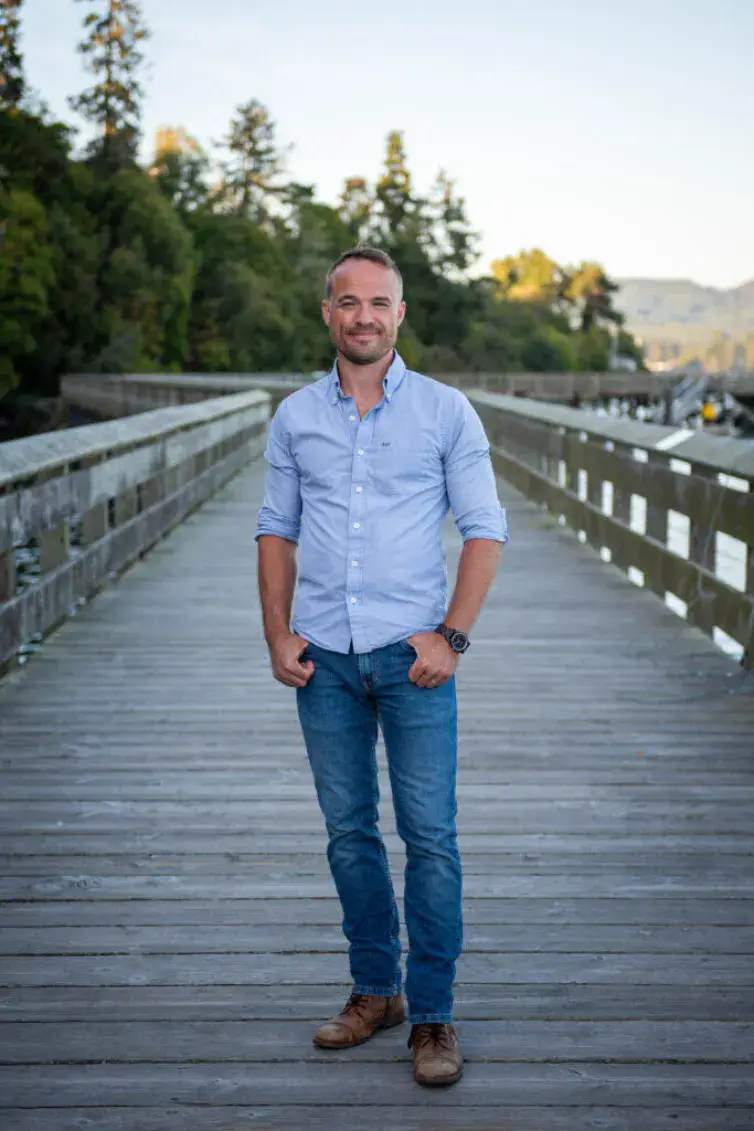
Sean Lewis holds a Master of Divinity from Carey Theological College and spent a decade as a pastor, including six years leading the Mustard Seed Street Church in Victoria, where questions of suffering, meaning, and purpose were urgent realities, not seminar topics. He does not approach faith as a clinical outsider; he speaks the language from the inside.
As a spiritual counsellor in Victoria, BC, Sean integrates pastoral counselling with Acceptance and Commitment Therapy (ACT), using values clarification to help you explore what truly matters without anyone dictating the answers. ACT’s values-based framework is supported by research in the Journal of Contextual Behavioral Science as effective for existential distress and meaning-making.
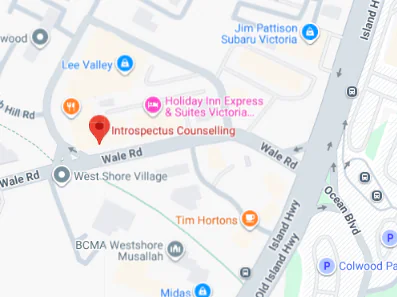
Whether you are deepening your faith, navigating church hurt, sitting with death anxiety, or wrestling with meaninglessness, Sean offers existential therapy in Colwood and is available as a Christian counsellor near Langford, with virtual sessions across British Columbia. Sessions are covered by most extended health plans. Book a session.
Spiritual Counselling From a Therapist Who Speaks the Language of Faith
What is the point of life? Maybe that question used to be philosophical and now it keeps you awake. Maybe God feels distant and you are questioning your faith but terrified of where that leads. Maybe you need a therapist who will not judge your faith or tell you your beliefs are the problem.
Sean Lewis holds a Master of Divinity from Carey Theological College and spent a decade as a pastor, including six years leading the Mustard Seed Street Church in Victoria, where questions of suffering, meaning, and purpose were urgent realities, not seminar topics. He does not approach faith as a clinical outsider; he speaks the language from the inside.
As a spiritual counsellor in Victoria, BC, Sean integrates pastoral counselling with Acceptance and Commitment Therapy (ACT), using values clarification to help you explore what truly matters without anyone dictating the answers. ACT’s values-based framework is supported by research in the Journal of Contextual Behavioral Science as effective for existential distress and meaning-making.
Whether you are deepening your faith, navigating church hurt, sitting with death anxiety, or wrestling with meaninglessness, Sean offers existential therapy in Colwood and is available as a Christian counsellor near Langford, with virtual sessions across British Columbia. Sessions are covered by most extended health plans. Book a session.