Anxiety Therapy







Recognizing the Alarm
- The Physical Hijack: Your heart races, your chest tightens, or you feel like you can’t breathe—even when there is no immediate danger.
- The What-If Machine: Your mind generates endless worst-case scenarios (health, money, loved ones). You try to “prepare” for every possibility, but the worry never actually brings relief.
- The Scan: You are constantly scanning for threats, waiting for the other shoe to drop. You find it hard to fully relax, even in safe places.
- Avoidance Creep: You have started narrowing your life to avoid triggers; skipping social events, driving certain routes, or avoiding emails. Each time you avoid it, the fear gets a little stronger.
- Safety Rituals: You check your phone constantly, over-prepare, or seek reassurance from others. These help temporarily, but they keep the anxiety loop alive.
- The What-If Machine: Your mind generates endless worst-case scenarios (health, money, loved ones). You try to “prepare” for every possibility, but the worry never actually brings relief.
- The Scan: You are constantly scanning for threats, waiting for the other shoe to drop. You find it hard to fully relax, even in safe places.
- Avoidance Creep: You have started narrowing your life to avoid triggers; skipping social events, driving certain routes, or avoiding emails. Each time you avoid it, the fear gets a little stronger.
- Safety Rituals: You check your phone constantly, over-prepare, or seek reassurance from others. These help temporarily, but they keep the anxiety loop alive.
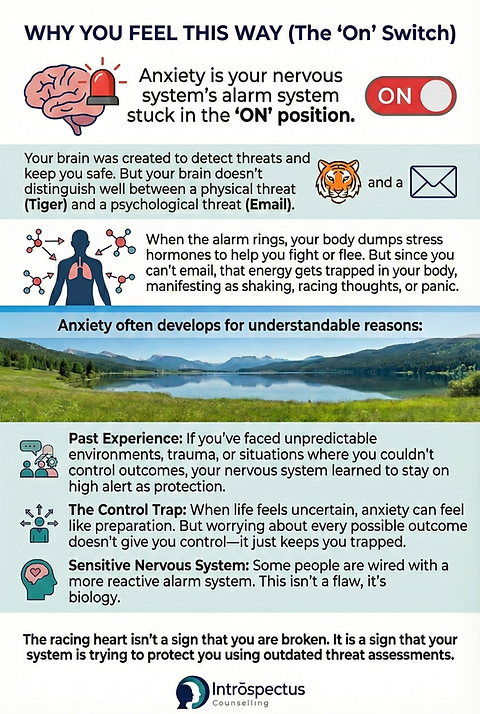
Why You Feel This Way (The "On" Switch)
- Past Experience: If you've faced unpredictable environments, trauma, or situations where you couldn't control outcomes, your nervous system learned to stay on high alert as protection.
- The Control Trap: When life feels uncertain, anxiety can feel like preparation. But worrying about every possible outcome doesn't give you control—it just keeps you trapped.
- Sensitive Nervous System: Some people are wired with a more reactive alarm system. This isn't a flaw; it's biology.
When the alarm rings, your body dumps stress hormones into your system to help you fight or flee. But since you can’t fight an email, that energy gets trapped in your body, manifesting as shaking, racing thoughts, or panic.
- Past Experience: If you've faced unpredictable environments, trauma, or situations where you couldn't control outcomes, your nervous system learned to stay on high alert as protection.
- The Control Trap: When life feels uncertain, anxiety can feel like preparation. But worrying about every possible outcome doesn't give you control—it just keeps you trapped.
- Sensitive Nervous System: Some people are wired with a more reactive alarm system. This isn't a flaw; it's biology.
These aren’t questions you can think your way out of. They require a different kind of work; one that integrates head, heart, and the willingness to sit with uncertainty.

My Approach: Body First, Mind Second

My Approach: Body First, Mind Second
- Grounding practices: Techniques like the 5-4-3-2-1 method or body scanning that anchor you in the present moment when anxiety pulls you into future catastrophes.
- Progressive muscle relaxation: Systematically tensing and releasing muscle groups to release the physical tension that fuels the anxiety cycle.
- Mindfulness training: Learning to observe anxiety without being consumed by it. You practice noticing “I’m having anxious thoughts” rather than “I am anxious and it’s going to destroy me.” This creates distance between you and the anxiety.
The goal is to widen your “Window of Tolerance,” the zone where you can handle stress without skyrocketing into panic or shutting down completely. We build your capacity to stay regulated even when life gets difficult.
- Grounding practices: Techniques like the 5-4-3-2-1 method or body scanning that anchor you in the present moment when anxiety pulls you into future catastrophes.
- Progressive muscle relaxation: Systematically tensing and releasing muscle groups to release the physical tension that fuels the anxiety cycle.
- Mindfulness training: Learning to observe anxiety without being consumed by it. You practice noticing “I’m having anxious thoughts” rather than “I am anxious and it’s going to destroy me.” This creates distance between you and the anxiety.
The goal is to widen your “Window of Tolerance,” the zone where you can handle stress without skyrocketing into panic or shutting down completely. We build your capacity to stay regulated even when life gets difficult.
My Approach: Body First, Mind Second
- The Shift: We move from “What if something terrible happens?” to “Even if X happens, I have the tools to handle it.”
- The Nuance: This isn’t about positive thinking. It is about accurate thinking.
You’ll learn to recognize when anxiety is distorting your perception and challenge worst-case scenarios with realistic alternatives.
- The Hierarchy: We start small. We don’t jump into the deep end.
- The Practice: You learn that you can tolerate discomfort, and that anxiety creates a “peak” that always eventually comes down.
- The Evidence: Each time you face a feared situation and survive it, you build proof that you’re more capable than anxiety tells you.
- Observing anxiety without judgment; noticing it’s present without making it mean something terrible about you
- Accepting temporary discomfort rather than needing to eliminate every uncomfortable feeling immediately
- Creating space between you and your anxious thoughts, you are not your anxiety; you are the person experiencing it
- The Hierarchy: We start small. We don’t jump into the deep end.
- The Practice: You learn that you can tolerate discomfort, and that anxiety creates a “peak” that always eventually comes down.
- The Evidence: Each time you face a feared situation and survive it, you build proof that you’re more capable than anxiety tells you.
- Observing anxiety without judgment; noticing it’s present without making it mean something terrible about you
- Accepting temporary discomfort rather than needing to eliminate every uncomfortable feeling immediately
- Creating space between you and your anxious thoughts, you are not your anxiety; you are the person experiencing it
Note: These aren’t quick fixes. They’re skills that require practice, but they work.

Ready to Quiet the Alarm?
Anxiety keeps you bracing for the worst. Let's build the tools to calm your system and reclaim your life.
$150 per 50-minute session - Insurance billing available
What You Can Expect
Change with anxiety is gradual, but relief is possible.

Early Shifts
You might notice you can catch a spiral before it takes over, or that you recover faster after a stressful event.

The Work
Some sessions will be practical (tools and skills); others will be deeper (processing the root causes).

The Result
You won't become a robot who never worries. But you will develop the capacity to experience anxiety without it controlling your decisions. Anxiety might sit in the passenger seat sometimes, but it will no longer be driving the car.

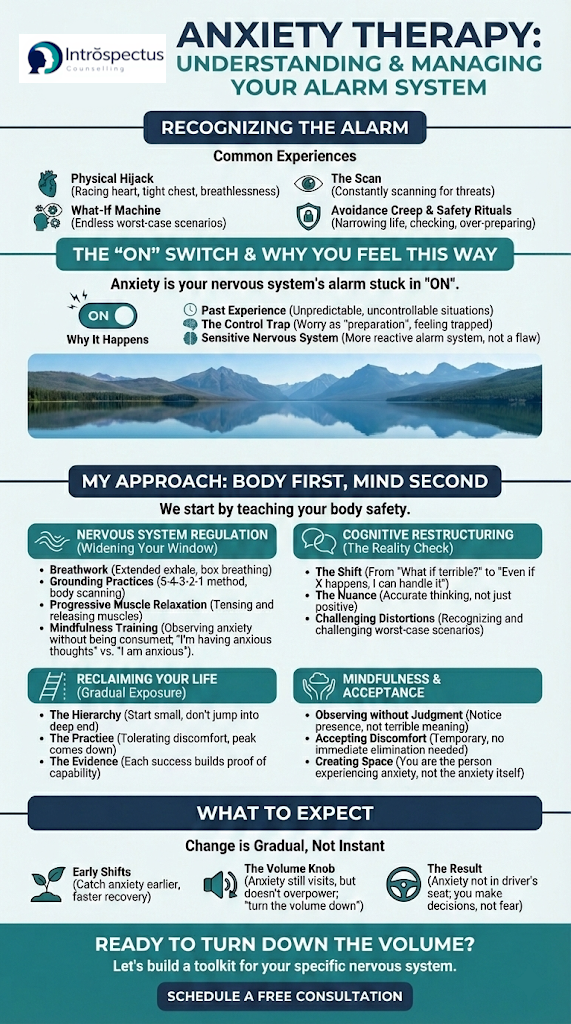
Summary Graphic
References
Papola, D., Miguel, C., Mazzaglia, M., Franco, P., Tedeschi, F., Romero, S. A., Patel, A. R., Ostuzzi, G., Gastaldon, C., Karyotaki, E., Harrer, M., Purgato, M., Sijbrandij, M., Patel, V., Furukawa, T. A., Cuijpers, P., & Barbui, C. (2024). Psychotherapies for generalized anxiety disorder in adults: A systematic review and network meta-analysis of randomized clinical trials. JAMA Psychiatry, 81(3), 250–259. https://doi.org/10.1001/jamapsychiatry.2023.3971
Steimer, T. (2002). The biology of fear- and anxiety-related behaviors. Dialogues in Clinical Neuroscience, 4(3), 231–249. https://doi.org/10.31887/DCNS.2002.4.3/tsteimer
Frequently Asked Questions About Anxiety Counselling
How do I know if my anxiety is bad enough to need therapy?
If you’re asking this question, your anxiety is likely already impacting your life enough to warrant support. You don’t need a formal diagnosis or to be in crisis to benefit from counselling. Therapy is appropriate whenever worry, physical tension, or avoidance begins to interfere with your daily functioning, sleep, relationships, or ability to enjoy life.
Common Signs It’s Time to Start
Many clients in Victoria and Greater Victoria “function” well at work but feel exhausted internally. Consider seeking support if you notice:
- Persistent worry you can’t switch off, even during downtime
- Avoidance patterns where you’re declining invitations, skipping activities, or restructuring your life around anxiety
- Physical tension that doesn’t resolve with rest (tight chest, stomach issues, headaches)
- Relationship strain from irritability, emotional withdrawal, or difficulty being present
- Sleep disruption from racing thoughts or restlessness
- Reduced enjoyment in activities that used to bring you pleasure
- Decision paralysis where even small choices feel overwhelming
These patterns suggest your nervous system needs support, not that you’re “weak” or “overreacting.”
👉 What are signs I need therapy?
You Don’t Need to Be in Crisis
Many people wait until anxiety is unbearable before seeking help. Research shows early intervention leads to faster improvement and prevents anxiety from worsening. You don’t need to prove your anxiety is “bad enough”—if it’s affecting your quality of life, that’s reason enough.
However, seek immediate support if you’re experiencing:
- Thoughts of self-harm or suicide
- Panic so intense you cannot function
- Dangerous substance use to cope
Crisis Resources:
- Vancouver Island Crisis Line: 1-888-494-3888 (24/7)
- BC Mental Health Support: 310-6789 (no area code needed)
- 911 for immediate danger
👉 Complete Crisis & Safety Resources
What Comes Next
If you’re in Victoria, Langford, Saanich, the Westshore, or Sooke, booking a first session is a low-pressure way to assess what you’re experiencing and whether working together feels right. You’re not committing to long-term treatment—just getting clarity.
Related Questions
- What happens in the first anxiety counselling session? – What to expect and how to prepare
- Can therapy help with panic attacks, social anxiety, or GAD? – Effectiveness for specific conditions
- How much does anxiety counselling cost in Victoria BC? – Fees, insurance, and affordability
- Could my physical symptoms be anxiety? – Understanding mind-body connections
- How many sessions will I need? – Treatment duration and expectations
Policy & Privacy
- Privacy Policy & Confidentiality Statement
- Informed Consent for Therapy (See: “What to Expect from Treatment”)
- Crisis & Safety Resources
Evidence-Based Practice References
1. American Psychological Association. “Understanding Psychotherapy and How It Works.” Accessed January 30, 2026\. https://www.apa.org/topics/psychotherapy/understanding 2. Anxiety Canada. “When to Seek Help.” Accessed January 30, 2026\. https://www.anxietycanada.com/articles/when-to-seek-help/ 3. Hofmann, Stefan G., and Jasper A. J. Smits. “Cognitive-Behavioral Therapy for Adult Anxiety Disorders: A Meta-Analysis.” The Journal of Clinical Psychiatry 69, no. 4 (2008): 621-632.
Author: Sean Lewis, MCP, MDiv, DPC Canadian Certified Counsellor (CCC) Clinically Reviewed: January 2026
What happens in the first anxiety counselling session in Victoria BC?
Your first anxiety counselling session in Victoria BC lasts 50 minutes and focuses on understanding how anxiety affects your daily life. Your counsellor will ask what brought you in, when anxiety began, what you’ve tried, and what you hope will feel different. After reviewing informed consent and confidentiality limits, you’ll discuss physical symptoms, worry patterns, triggers, and daily life impact. You’ll begin shaping a treatment plan using approaches like CBT, ACT, or mindfulness.
You control the pace and can skip topics that feel too raw. Research shows that the therapeutic alliance formed in the first session is a significant predictor of treatment outcomes; many clients report feeling relief simply from being heard and validated.¹
Before Your First Session
Optional preparation:
- Complete any intake forms sent by email
- Jot down notes about what brought you here
- Write down questions about confidentiality, approach, or scheduling
What to bring:
- Nothing required—just yourself
- Insurance card (if planning to submit for reimbursement)
- Questions or concerns you want to discuss
Practical details:
- Location: 132-328 Wale Road, Colwood (parking available)
- Arrive a few minutes early to settle in
- Virtual sessions: Test camera/sound; use private space
👉 How do I prepare for my first therapy session?
If You Are in Crisis
First sessions are for assessment and planning, not emergency crisis care. If experiencing thoughts of self-harm, panic so intense you cannot function, or immediate risk:
- Vancouver Island Crisis Line: 1-888-494-3888 (24/7)
- BC Mental Health Support: 310-6789 (no area code)
- 911 or nearest emergency department if in immediate danger
👉 What happens if I am having a mental health crisis?
Session Details & Fees
Anxiety counselling sessions are 50 minutes and cost $150 per session. Most extended health plans cover Canadian Certified Counsellor (CCC) services.
👉 How much does anxiety counselling cost in Victoria BC? – Complete fee structure, insurance coverage, and affordability options
Related Questions
- How do I know if my anxiety is bad enough to need therapy? – Recognizing when professional help could benefit you
- What type of therapy is best for anxiety? – Evidence-based approaches (CBT, ACT)
- How long does therapy take to work? – Session expectations and timelines
- Is what I share in therapy confidential? – Understanding privacy protections
- Will I have to talk about things I don’t want to talk about? – You control what you share
Next Step
If you’re in Victoria, Langford, Saanich, the Westshore, or Sooke, booking a first session gives you a clear assessment of what’s happening and whether this approach feels like the right fit. Virtual sessions are also available across BC.
Policy Details
- Privacy Policy & Confidentiality Statement (See: “Confidentiality and Its Limits”)
- Informed Consent for Therapy (See: “What to Expect in Your First Session”)
- Crisis & Safety Resources
Evidence-Based Practice References
1. Horvath, A. O., Del Re, A. C., Flückiger, C., & Symonds, D. “Alliance in individual psychotherapy.” Psychotherapy 48, no. 1 (2011): 9-16. https://doi.org/10.1037/a0022186 2. Levitt, Heidi M., Michael Pomerville, and Frank M. Surace. “A Qualitative Meta-Analysis Examining Clients’ Experiences of Psychotherapy: A New Agenda.” Psychological Bulletin 142, no. 8 (2016): 801-830. https://doi.org/10.1037/bul0000057 3. Centre for Addiction and Mental Health (CAMH). “Anxiety Disorders.” Accessed January 23, 2026\. https://www.camh.ca/en/health-info/mental-illness-and-addiction-index/anxiety-disorders
Author: Sean Lewis, MA, MDiv, MCP, Canadian Certified Counsellor (CCC) Clinically Reviewed: January 2026
Could my physical symptoms (racing heart, dizziness, stomach issues) be anxiety?
Yes. Physical symptoms like racing heart, dizziness, chest tightness, stomach issues, and trembling are common manifestations of anxiety. Many people undergo extensive medical testing before discovering anxiety is the underlying cause.¹ Because these symptoms can also indicate thyroid issues, POTS, or cardiac concerns, see your doctor first to rule out physical causes.²
Why Anxiety Affects Your Body
When your brain perceives threat, it activates the sympathetic nervous system’s “fight or flight” response, releasing stress hormones including adrenaline and cortisol.³ This physiological cascade causes:
- Racing heart (pumping blood to muscles)
- Rapid breathing (increasing oxygen)
- Digestive upset (digestion slows as blood diverts to muscles)
- Muscle tension (preparing for action)
- Dizziness or lightheadedness
- Chest tightness
- Sweating or trembling
Research shows that people with generalized anxiety disorder (GAD) report significantly higher rates of somatic symptoms compared to the general population, with gastrointestinal and cardiovascular symptoms being most common.⁴
For Trauma Survivors
Your body may experience these sensations without conscious triggers, responding to past danger as if it’s happening now. This is a normal trauma response, not a sign you’re “broken.”⁵ Trauma-informed therapy helps you understand these body-based reactions and develop regulation skills.
👉 Trauma/PTSD Therapy – Trauma-informed somatic approaches
Medical Evaluation Comes First
This information is educational and not medical advice. Your doctor will evaluate whether your symptoms could indicate:
- Thyroid disorders
- Cardiac conditions
- Postural Orthostatic Tachycardia Syndrome (POTS)
- Gastrointestinal disorders
- Other medical conditions
Studies show that anxiety and medical conditions can coexist, and ruling out physical causes is an essential first step.² As a counsellor, I cannot diagnose medical conditions.
How Therapy Helps (After Medical Clearance)
Once medical causes are ruled out, evidence-based treatments for somatic anxiety include:
Cognitive Behavioural Therapy (CBT):
- Interrupts the symptom-fear cycle (where fear of symptoms creates more symptoms)
- Teaches you to reinterpret physical sensations accurately
- Reduces catastrophic thinking about body sensations
Mindfulness-Based Stress Reduction (MBSR):
- Regulates nervous system responses
- Builds awareness of body sensations without reacting
- Reduces physiological arousal
Research demonstrates that both CBT and mindfulness-based interventions significantly reduce somatic symptoms in anxiety disorders.⁶⁷
👉 Anxiety Treatment – Specialized anxiety and panic therapy in Victoria BC
Related Questions
- What are signs I need therapy? – Recognizing when to seek professional support
- Can therapy help with anxiety? – Evidence for anxiety treatment effectiveness
- What type of therapy is best for anxiety? – CBT, ACT, and mindfulness approaches
- What should I expect in my first therapy session? – Initial assessment and goal-setting
- How long does therapy take to work? – Timeline for symptom improvement
- Does my insurance cover counselling services? – Extended health benefits for CCCs
Services
- Anxiety Treatment – Specialized anxiety and panic therapy in Victoria BC
- Trauma/PTSD Therapy – Trauma-informed somatic approaches
- Stress and Burnout – Nervous system regulation and workplace stress
Policy Details
- Crisis & Safety Resources – Immediate help for mental health emergencies
- Informed Consent for Therapy (See: “What to Expect from Counselling”)
- Privacy Policy & Confidentiality Statement (See: “Your Rights as a Client”)
Next Step
Medical clearance but still experiencing physical anxiety symptoms in Greater Victoria, Langford, or Westshore? Booking a first session helps you understand the mind-body connection and develop regulation skills. Virtual sessions also available across BC.
Questions? Contact me at sean@introspectuscounselling.ca or 250-556-4623.
Evidence-Based Practice References
1. Haug, T. T., et al. “The Validity of the Hospital Anxiety and Depression Scale: An Updated Literature Review.” Journal of Psychosomatic Research 52, no. 2 (2002): 69-77. https://pubmed.ncbi.nlm.nih.gov/11832252/ 2. Bystritsky, A., Khalsa, S. S., Cameron, M. E., & Schiffman, J. “Current Diagnosis and Treatment of Anxiety Disorders.” P\&T 38, no. 1 (2013): 30-57. https://www.ncbi.nlm.nih.gov/pmc/articles/PMC3628173/ 3. Chu, B., Marwaha, K., Sanvictores, T., & Ayers, D. “Physiology, Stress Reaction.” StatPearls. Updated September 12, 2022\. https://www.ncbi.nlm.nih.gov/books/NBK541120/ 4. Haller, H., Cramer, H., Lauche, R., & Dobos, G. “Somatoform Disorders and Medically Unexplained Symptoms in Primary Care: A Systematic Review and Meta-Analysis of Prevalence.” Deutsches Ärzteblatt International 112, no. 16 (2015): 279-287. https://www.ncbi.nlm.nih.gov/pmc/articles/PMC4463312/ 5. van der Kolk, B. A., Stone, L., West, J., Rhodes, A., Emerson, D., Suvak, M., & Spinazzola, J. “Yoga as an Adjunctive Treatment for Posttraumatic Stress Disorder: A Randomized Controlled Trial.” Journal of Clinical Psychiatry 75, no. 6 (2014): e559-e565. https://www.frontiersin.org/journals/psychiatry/articles/10.3389/fpsyt.2021.622903/full 6. Lakhan, S. E., & Schofield, K. L. “Mindfulness-Based Therapies in the Treatment of Somatization Disorders: A Systematic Review and Meta-Analysis.” PLoS One 8, no. 8 (2013): e71834. https://www.ncbi.nlm.nih.gov/pmc/articles/PMC3733545/ 7. Kleinstäuber, M., Witthöft, M., & Hiller, W. “Efficacy of Short-Term Psychotherapy for Multiple Medically Unexplained Physical Symptoms: A Meta-Analysis.” Clinical Psychology Review 31, no. 1 (2011): 146-160. https://pubmed.ncbi.nlm.nih.gov/20920834/ 8. Kroenke, K. “Patients Presenting with Somatic Complaints: Epidemiology, Psychiatric Comorbidity and Management.” International Journal of Methods in Psychiatric Research 12, no. 1 (2003): 34-43. https://www.ncbi.nlm.nih.gov/pmc/articles/PMC1924708/
Author: Sean Lewis, MA, MDiv, MCP, Canadian Certified Counsellor (CCC) Clinically Reviewed: January 2026
}
Can therapy help with panic attacks, social anxiety, or generalized anxiety disorder?
Yes; therapy is highly effective for panic attacks, social anxiety, and generalized anxiety disorder (GAD). Evidence-based approaches like Cognitive Behavioural Therapy (CBT) and Acceptance and Commitment Therapy (ACT) directly target these conditions. A 2024 meta-analysis of 441 trials found meaningful response rates—defined as achieving at least 50% symptom reduction—of 38% for panic disorder, 32% for social anxiety, and 36% for generalized anxiety disorder.¹
Therapy teaches practical skills: managing physical symptoms, challenging anxious thoughts, gradually facing avoided situations, and rebuilding confidence. These tools keep working after treatment ends. Most people notice some relief within the first few sessions, with more substantial change over roughly 12–20 weekly sessions for moderate anxiety. For more severe symptoms, medication alongside therapy may be recommended in consultation with your family physician or psychiatrist.²
If You Are in Crisis
If you are experiencing panic so intense you cannot function, thoughts of self-harm, or immediate danger:
- Vancouver Island Crisis Line: 1-888-494-3888 (24/7)
- BC Mental Health Support: 310-6789 (no area code)
- Call 911 if you are in immediate danger
👉 What happens if I am having a mental health crisis?
Related Questions
- How do I know if my anxiety is bad enough to need therapy?
- What type of therapy is best for anxiety?
- What happens in the first anxiety counselling session?
- How long does therapy take to work?
- Does therapy really work? / Is therapy effective?
Policy Details
Session & Insurance Information
👉 Does my insurance cover a Canadian Certified Counsellor?
👉 What if I cannot afford regular weekly sessions?
Next Step
If you are in Victoria, Langford, Saanich, the Westshore, or Sooke and experiencing panic attacks, social anxiety, or generalized anxiety, booking a first session provides a clear assessment of which approach is likely to work best for your situation. Virtual sessions are also available across BC.
Evidence-Based Practice References
1. Cuijpers, Pim, et al. “Absolute and Relative Outcomes of Psychotherapies for Eight Mental Disorders: A Systematic Review and Meta-Analysis.” World Psychiatry 23, no. 2 (2024): 267-275. https://doi.org/10.1002/wps.21203 2. Canadian Network for Mood and Anxiety Treatments (CANMAT). “Clinical Guidelines for the Management of Anxiety Disorders.” Canadian Journal of Psychiatry 59, no. 9 (2014): 1-34. 3. Hofmann, Stefan G., and Jasper A. J. Smits. “Cognitive-Behavioral Therapy for Adult Anxiety Disorders: A Meta-Analysis.” The Journal of Clinical Psychiatry 69, no. 4 (2008): 621-632. 4. Bluett, Eric J., et al. “Acceptance and Commitment Therapy for Anxiety and OCD Spectrum Disorders: An Empirical Review.” Journal of Anxiety Disorders 28, no. 6 (2014): 612-624.
Author: Sean Lewis, MA, MDiv, MCP, Canadian Certified Counsellor (CCC)
Clinically Reviewed: January 2026
How many sessions will I need for anxiety treatment? / How long does anxiety therapy take?
Most people with moderate anxiety see meaningful improvement in 12-20 weekly sessions using Cognitive Behavioral Therapy (CBT) or Acceptance and Commitment Therapy (ACT). Treatment length varies based on anxiety severity, co-occurring conditions, and consistency of practice between sessions.¹²
Session Ranges by Anxiety Type
Research-backed treatment timelines for evidence-based anxiety therapy:
Panic Disorder:
- 12-15 sessions of CBT typically produces significant symptom reduction
- Most improvement occurs within first 3-4 months of weekly treatment
Generalized Anxiety Disorder (GAD):
- 12-20 sessions recommended by clinical practice guidelines¹²
- Optimal outcomes typically require 3-5 months of consistent weekly therapy
Social Anxiety Disorder:
- 14-16 sessions of CBT show substantial effectiveness³
- Treatment focuses on exposure therapy and cognitive restructuring
Co-Occurring Conditions:
- Anxiety with depression or trauma may require 20-30+ sessions
- Complex presentations benefit from longer treatment timelines
👉 Can therapy help with panic attacks, social anxiety, or generalized anxiety disorder?
What Affects Treatment Length?
Your Starting Point:
- Severity and duration of anxiety symptoms
- Co-occurring conditions (depression, trauma, substance use)
- Previous therapy experience
Your Engagement:
- Consistency of practice between sessions
- Attendance regularity (weekly vs. bi-weekly)
- Willingness to try new coping strategies
- Completion of between-session exercises
Your Circumstances:
- Current life stressors and stability
- Strength of support system
- Access to other resources (medication, community support)
Research shows that more frequent sessions early in treatment (weekly vs. bi-weekly) and consistent practice of skills between sessions are associated with better outcomes.⁴
Timeline for Noticing Improvement
Early changes (Sessions 1-6): Many people notice initial relief within the first 4-6 sessions, including better understanding of anxiety triggers, some reduction in physical symptoms, and new coping strategies to practice.
Substantial changes (Sessions 8-16): More significant symptom reduction typically emerges after 8-12 weeks of consistent weekly therapy, including fewer panic attacks or worry episodes, improved daily functioning, and stronger confidence in managing anxiety.
Skill consolidation (Sessions 12-20): Final sessions focus on preventing relapse, handling setbacks independently, and maintaining gains without ongoing support.
Important: Progress isn’t linear. Some weeks feel like setbacks, and that’s normal and expected in anxiety treatment.
After Active Treatment: Maintaining Your Progress
\*\*Research shows that CBT skills continue working after therapy ends.\*\*⁵ The coping strategies you learn become tools you can use for life, not just during active treatment.
Maintenance options:
- Monthly “check-in” sessions to reinforce skills and catch early warning signs
- As-needed sessions during high-stress periods (job changes, relationships, major transitions)
- Booster sessions if symptoms begin to return
Many clients transition to monthly sessions after completing 12-20 weeks of weekly therapy, then move to as-needed support.
Comparing Anxiety Treatment Options
| Treatment Approach | Typical Timeline | Evidence Base |
|---|---|---|
| —– | —– | —– |
| CBT for Anxiety | 12-20 weekly sessions (3-5 months) | Strong evidence; effects persist after treatment⁵ |
| Medication | 4-6 weeks to see effects; ongoing use required | Effective while taking; symptoms may return if stopped |
| Combined (CBT \+ Medication) | Often recommended for severe anxiety | May provide faster initial relief |
Note: This information is educational, not medical advice. Decisions about medication should be made with your physician or psychiatrist.
What If I’m Not Improving?
If you’re not noticing any changes after 6-8 sessions, that’s important feedback. Together we would:
1. Reassess your goals and treatment approach 2. Explore barriers (practice consistency, life stressors, underlying trauma) 3. Adjust the treatment plan or consider additional support 4. Discuss referral options if a different level of care would be more appropriate
You’re never “stuck” in treatment that isn’t working.
Insurance & Session Limits
Many extended health plans in BC cover 12-20 sessions annually, which aligns well with evidence-based treatment timelines for moderate anxiety. Some plans cover more sessions for complex cases.
ICBC coverage: 12 pre-approved sessions for motor vehicle accident-related anxiety CVAP coverage: Up to 48 hours for crime-related trauma and anxiety
👉 Is anxiety therapy covered by insurance or extended health benefits in BC?
Flexible Scheduling After Initial Treatment
After building foundational skills (typically 6-8 weekly sessions), many clients benefit from:
- Bi-weekly sessions to practice skills with more independence
- Monthly maintenance to prevent relapse
- As-needed sessions during stressful life transitions
This flexibility allows you to maintain progress while managing costs and building long-term self-sufficiency.
Related Questions
- How do I know if my anxiety is bad enough to need therapy?
- What happens in the first anxiety counselling session in Victoria BC?
- Can therapy help with panic attacks, social anxiety, or generalized anxiety disorder?
- How much does anxiety counselling cost in Victoria BC?
- Could my physical symptoms be anxiety?
- Is anxiety therapy covered by insurance?
Services
- Anxiety Treatment – Specialized anxiety therapy in Victoria BC
- Trauma/PTSD Therapy – For anxiety stemming from trauma
- Stress and Burnout – Workplace and chronic stress management
Policy Details
- Privacy Policy & Confidentiality Statement (See: “Treatment Planning and Progress”)
- Informed Consent for Therapy (See: “Duration and Frequency of Sessions”)
- Fees & Billing (See: “Session Packages and Flexible Scheduling”)
Next Step
Ready to start addressing your anxiety with evidence-based therapy in Greater Victoria? Book a first session to assess your specific situation and develop a realistic timeline for your goals. Virtual sessions also available across BC.
Questions about treatment length, scheduling, or insurance coverage?
- Email: sean@introspectuscounselling.ca
- Phone: 250-556-4623
Evidence-Based Practice References
1. Katzman, M. A., et al. “Canadian Clinical Practice Guidelines for the Management of Anxiety, Posttraumatic Stress and Obsessive-Compulsive Disorders.” BMC Psychiatry 14, Suppl 1 (2014): S1. https://www.ncbi.nlm.nih.gov/pmc/articles/PMC4120194/ 2. Canadian Coalition for Seniors’ Mental Health. “Canadian Guidelines for the Assessment and Treatment of Anxiety in Older Adults.” Accessed January 30, 2026\. https://ccsmh.ca/areas-of-focus/anxiety/ 3. National Institute for Health and Care Excellence (NICE). “Social Anxiety Disorder: Recognition, Assessment and Treatment.” NICE Clinical Guideline CG159. May 2013\. https://www.nice.org.uk/guidance/cg159 4. Mayo Clinic. “Cognitive Behavioral Therapy.” Accessed January 30, 2026\. https://www.mayoclinic.org/tests-procedures/cognitive-behavioral-therapy/about/pac-20384610 5. Hollon, S. D., Stewart, M. O., & Strunk, D. “Enduring Effects for Cognitive Behavior Therapy in the Treatment of Depression and Anxiety.” Annual Review of Psychology 57 (2006): 285-315. https://pubmed.ncbi.nlm.nih.gov/16318597/
Author: Sean Lewis, MA, MDiv, MCP, Canadian Certified Counsellor (CCC) Clinically Reviewed: January 2026
How much does anxiety counselling cost in Victoria BC?
In Victoria and across BC, private counselling with a master’s-trained therapist typically ranges from about $140–$180 per 50-minute session, with some specialized services or senior practitioners charging up to $200–$250.¹ At Introspectus Counselling in Colwood (Greater Victoria), sessions are $150 per 50 minutes. Many extended health plans cover counselling with Canadian Certified Counsellors (CCCs); coverage varies by plan. We accept credit card, e-transfer, cash, or cheque.
Quick Links:
Understanding Your Options in Victoria
Understanding the local market helps you make an informed choice:
| Credential | Typical Fee Range (Victoria BC) | Education Level | Can Prescribe | MSP/Insurance Coverage |
|---|---|---|---|---|
| —– | —– | —– | —– | —– |
| Canadian Certified Counsellor (CCC) | $140–$180 | Master’s degree | No | Many extended health plans² |
| Registered Clinical Counsellor (RCC) | $140–$180 | Master’s degree | No | Many extended health plans² |
| Registered Psychologist (R.Psych) | $190–$250+ | Doctoral degree | No | Most extended health plans |
| Psychiatrist (MD) | MSP-covered | Medical degree | Yes | MSP (BC residents)³ |
All of these professionals can effectively treat anxiety disorders for most people. Research shows that your relationship and fit with the therapist often matter more than the specific credential; the main differences are in governance, education level, cost, and whether they can prescribe medication.
👉 Learn more about our anxiety treatment approach
Insurance & Extended Health Benefits
Many extended health plans in BC cover counselling with Canadian Certified Counsellors (CCCs) and Registered Clinical Counsellors (RCCs). Coverage depends on your specific employer plan, not just the insurer’s name, so check your benefits booklet or call your provider to confirm whether “clinical counselling” or “counselling by a CCC/RCC” is included.²
After each session, you’ll receive a detailed receipt with my CCC registration number for insurance reimbursement.
Common BC insurers that may cover CCC services:
- Pacific Blue Cross
- Sun Life Financial
- Manulife
- Canada Life
- Green Shield Canada
Important: Coverage eligibility and reimbursement amounts are determined by your individual or workplace plan.²
👉 Does my insurance cover counselling?
Alternative Funding Programs in BC
Beyond workplace insurance, several BC programs may cover anxiety counselling:
CVAP (Crime Victim Assistance Program):
- 48 hours of counselling for victims
- 36 hours for immediate family members
- 12 hours for witnesses
- Plus up to 12 interim sessions while your claim is processed⁴
- Applies if your anxiety stems from being a victim of crime
👉 Learn more about CVAP coverage
ICBC (Motor Vehicle Accidents):
- 12 pre-approved counselling sessions within the first 12 weeks after your crash
- $157 per 50-minute session (for treatments between May 1, 2025 and March 31, 2026)⁵
- We bill ICBC directly; usually no out-of-pocket cost for pre-approved sessions
- Applies if your anxiety is related to a car accident
👉 Learn more about ICBC coverage
WorkSafe BC:
- May cover counselling for work-related psychological injuries
- Coverage and billing depend on your specific claim and WorkSafeBC’s provider agreements
- If you have an accepted WorkSafeBC claim, we can discuss billing options
👉 Learn more about WorkSafe BC coverage
If You’re Concerned About Affordability
We never want finances to prevent you from getting support for anxiety. If our $150/session fee isn’t sustainable right now, you have options:
At our practice:
- Limited sliding scale spots available (discussed confidentially in your first session)
- Flexible scheduling: bi-weekly or monthly sessions after building initial skills (typically 6-8 weekly sessions to start)
Free or low-cost options in Greater Victoria:
- Island Health Mental Health Services: 1-888-885-8824⁶
- Vancouver Island Crisis Line (24/7): 1-888-494-3888
👉 What if I can’t afford regular weekly sessions?
Why Invest in Anxiety Treatment?
Research shows anxiety treatment produces measurable returns:
Economic value:
- People who receive anxiety treatment reduce overall healthcare costs by using fewer emergency services⁷
- Early intervention prevents anxiety from worsening and requiring more intensive treatment later
Long-term benefits:
- CBT for anxiety produces lasting changes; skills continue working after therapy ends⁸
- Treatment addresses underlying patterns, not just surface symptoms
- People report sustained improvements in quality of life⁹
The cost of untreated anxiety: When you factor in missed work days, strained relationships, physical health consequences (chronic tension, sleep problems, digestive issues), and reduced quality of life, untreated anxiety often costs more than getting help.
What’s Included in Each Session
Every anxiety counselling session at our practice includes:
- Evidence-based treatment approaches proven effective for anxiety disorders, including Cognitive Behavioral Therapy (CBT) and Acceptance and Commitment Therapy (ACT)
- Personalized strategies tailored to your specific anxiety triggers (social situations, health worries, intrusive thoughts, panic symptoms)
- Practical skills you can use between sessions to manage anxiety when it shows up
- A safe, confidential space to explore what’s driving your anxiety without judgment
- Trauma-informed care that recognizes how past experiences can fuel current anxiety patterns
👉 Learn more about our anxiety treatment approach
Next Steps
Ready to address your anxiety with evidence-based counselling in Greater Victoria?
Book My First Session – We’re located in Colwood (132-328 Wale Road) and serve clients throughout Victoria, Langford, Westshore, Sooke, and Vancouver Island. Virtual sessions also available across BC.
Questions about insurance, sliding scale, or how anxiety counselling works?
- Email: sean@introspectuscounselling.ca
- Phone: 250-556-4623
Related Questions:
- Does my insurance cover counselling? – Extended health benefits and CCC coverage
- What should I expect in my first therapy session? – Session structure and what to bring
- What if I can’t afford regular weekly sessions? – Sliding scale and flexible scheduling
- Does MSP cover counselling in BC? – Public vs. private coverage explained
- Is what I share confidential? – Privacy protections for your anxiety treatment
Policy Details:
- Privacy Policy & Confidentiality Statement (See: “Insurance Disclosures and Billing”)
- Informed Consent for Therapy (See: “Fees and Payment”)
- Fees & Billing (See: “Fee Structure and Payment Options”)
- Cancellation Policy (See: “24-Hour Notice Requirement”)
Evidence-Based Practice References
1. BC Association of Clinical Counsellors (BCACC). “BCACC Fee Guide 2024.” Accessed January 30, 2026\. https://bcacc.ca/bcacc-fee-guide-2024/ 2. HeretoHelp BC. “How Can I Pay for Mental Health Care?” Accessed January 30, 2026\. https://www.heretohelp.bc.ca/q-and-a/how-can-i-pay-for-mental-health-care 3. Government of British Columbia. “Medical Services Plan (MSP): What’s Covered.” Accessed January 30, 2026\. https://www2.gov.bc.ca/gov/content/health/health-drug-coverage/msp/bc-residents/benefits/services-covered-by-msp 4. Government of British Columbia. “CVAP Counselling Guidelines 2024.” Accessed January 30, 2026\. https://www2.gov.bc.ca/assets/gov/law-crime-and-justice/criminal-justice/bc-criminal-justice-system/if-victim/publications/cvap-counselling-guidelines-2024.pdf 5. ICBC. “Accessing Treatment During Your First 12 Weeks of Recovery.” Accessed January 30, 2026\. https://www.icbc.com/claims/injury/accessing-treatment-during-your-first-12-weeks-of-recovery 6. Canadian Mental Health Association British Columbia. “Getting Help for Mental Illnesses.” Accessed January 30, 2026\. https://bc.cmha.ca/documents/getting-help-for-mental-illnesses-2/ 7. Chisholm, D., et al. “Scaling-Up Treatment of Depression and Anxiety: A Global Return on Investment Analysis.” The Lancet Psychiatry 3, no. 5 (2016): 415-424. https://www.who.int/news/item/13-04-2016-investing-in-treatment-for-depression-and-anxiety-leads-to-fourfold-return 8. Hofmann, S. G., et al. “The Efficacy of Cognitive Behavioral Therapy: A Review of Meta-analyses.” Cognitive Therapy and Research 36, no. 5 (2012): 427-440. https://doi.org/10.1007/s10608-012-9476-1 9. Bandelow, B., et al. “Treatment of Anxiety Disorders.” Dialogues in Clinical Neuroscience 19, no. 2 (2017): 93-107. https://www.ncbi.nlm.nih.gov/pmc/articles/PMC5573566/
Author: Sean Lewis, MA, MDiv, MCP, Canadian Certified Counsellor (CCC) Clinically Reviewed: January 2026
Is anxiety therapy covered by insurance or extended health benefits in BC?
Yes, many extended health plans in BC cover counselling for anxiety from Canadian Certified Counsellors (CCCs), particularly in larger organizations. Coverage is plan-specific and varies widely; always verify with your benefits provider before starting therapy. BC’s Medical Services Plan (MSP) does not cover private counselling.¹ At Introspectus Counselling in Greater Victoria, sessions are $150 per 50 minutes.
How Extended Health Benefits Work
Coverage details vary significantly by plan:
Reimbursement rates:
- Some plans reimburse 80–100% of session costs
- Others provide fixed dollar amounts per session
Annual maximums:
- Typically range from $500–$3,000 per person per benefit year
- Some plans have unlimited coverage for specific providers
Coverage depends on your specific employer plan, not just the insurer’s name. Two employees with the same insurer may have completely different counselling coverage.
👉 How much does anxiety counselling cost? – Fee structure and payment options
Common BC Insurers That May Cover Counselling
Extended health plans from the following providers may cover counselling with CCCs or RCCs, but coverage depends on your specific plan:²³⁴⁵
- Pacific Blue Cross (offers direct billing as of July 11, 2025)⁶
- Canada Life
- Manulife
- Sun Life Financial
- Green Shield Canada
Important: Coverage eligibility is determined by your individual or workplace plan, not the insurance company alone.
Verifying Your Coverage: 6 Questions to Ask
Call the number on your benefits card and ask:
1. “Do you cover Canadian Certified Counsellors (CCCs) for mental health counselling?” 2. “What percentage of each session is covered?” 3. “What is my annual maximum for counselling services?” 4. “Is there a per-session maximum reimbursement amount?” 5. “Do I need a referral or pre-authorization?” 6. “Can I submit claims online, or do I need to mail receipts?”
After each session, you’ll receive a detailed receipt with my CCC registration number for insurance reimbursement.
Direct Billing vs. Reimbursement
Pacific Blue Cross (Direct Billing): Effective July 11, 2025, Pacific Blue Cross enabled direct billing for Registered Clinical Counsellors (RCCs) and Canadian Certified Counsellors (CCCs) who are members of professional associations such as BCACC or CCPA.⁶ We offer direct billing for Pacific Blue Cross clients, meaning there’s typically no out-of-pocket cost.
Other Insurers (Reimbursement): For plans with Canada Life, Manulife, Sun Life, and Green Shield Canada, direct billing availability varies by plan and provider. Most clients pay the full session fee upfront, then submit their receipt to their insurer for reimbursement (usually within 2–4 weeks).⁴
Alternative Funding Programs in BC
If you don’t have extended health benefits, several BC-funded programs may cover anxiety counselling:
CVAP (Crime Victim Assistance Program):
- 48 hours of counselling for victims
- 36 hours for immediate family members
- 12 hours for witnesses
- Plus up to 12 interim sessions while your claim is processed⁷
- Fully funded; no out-of-pocket costs
- Applies if your anxiety stems from being a victim of crime
👉 Learn more about CVAP coverage
ICBC (Motor Vehicle Accidents):
- 12 pre-approved counselling sessions within the first 12 weeks after your crash
- $157 per 50-minute session (for treatments between May 1, 2025 and March 31, 2026)⁸
- We bill ICBC directly; usually no out-of-pocket cost for pre-approved sessions
- Applies if your anxiety is related to a car accident
👉 Learn more about ICBC coverage
WorkSafeBC (Work-Related Psychological Injuries): If you have an accepted WorkSafeBC claim for a work-related psychological injury or mental health condition (such as anxiety, depression, or PTSD resulting from a workplace incident), WorkSafeBC may cover the cost of treatment by an approved healthcare provider, as well as wage-loss and return-to-work support.⁹
Coverage and billing depend on your specific claim. If you have an accepted WorkSafeBC claim, we can discuss whether we can bill WorkSafeBC directly or help you submit receipts for reimbursement.
👉 Learn more about WorkSafe BC coverage
What MSP Covers (And Doesn’t Cover)
BC’s Medical Services Plan (MSP) does NOT cover private counselling with CCCs or RCCs. MSP only covers:
- Psychiatrist visits (when referred by your family doctor)
- Public mental health programs through Island Health
- Some hospital-based counselling services
\*\*Public mental health services typically have wait times of several months.\*\*¹⁰ Private counselling offers immediate access with choice of therapist and flexible scheduling.
👉 Public vs. private mental health care in BC
If You’re Concerned About Affordability
We never want finances to prevent you from getting support for anxiety. If our $150/session fee isn’t sustainable and you don’t have insurance coverage, you have options:
At our practice:
- Limited sliding scale spots available (discussed confidentially in your first session)
- Flexible scheduling: bi-weekly or monthly sessions after building initial skills
Free or low-cost options in Greater Victoria:
- Island Health Mental Health Services: 1-888-885-8824¹⁰
- Vancouver Island Crisis Line (24/7): 1-888-494-3888
👉 What if I can’t afford regular weekly sessions?
Next Steps
Ready to verify your insurance coverage and book your first anxiety counselling session?
Book My First Session – We’re located in Colwood (132-328 Wale Road) and serve clients throughout Victoria, Langford, Westshore, Sooke, and Vancouver Island. Virtual sessions also available across BC.
Questions about insurance verification, direct billing, or coverage?
- Email: sean@introspectuscounselling.ca
- Phone: 250-556-4623
Related Questions:
- How much does anxiety counselling cost in Victoria BC? – Fee structure and payment options
- What if I can’t afford regular weekly sessions? – Sliding scale and flexible scheduling
- What should I expect in my first therapy session? – Session structure and what to bring
- Does MSP cover counselling in BC? – Public vs. private coverage explained
- How do I know if therapy is working? – Measuring progress in anxiety treatment
- Can I use my HSA or health spending account? – HSA and FSA eligibility
Policy Details:
- Privacy Policy & Confidentiality Statement (See: “Insurance Disclosures and Billing”)
- Informed Consent for Therapy (See: “Fees and Payment”)
- Fees & Billing (See: “Insurance Reimbursement Process”)
- Cancellation Policy (See: “Insurance and Cancellations”)
Evidence-Based Practice References
1. Government of British Columbia. “Medical Services Plan (MSP): What’s Covered.” Accessed January 30, 2026\. https://www2.gov.bc.ca/gov/content/health/health-drug-coverage/msp/bc-residents/benefits/services-covered-by-msp 2. Sun Life Financial. “Mental Health Support.” Accessed January 30, 2026\. https://www.sunlife.ca/en/health/mental-health-support 3. Canada Life. “Group Benefits – Mental Health.” Accessed January 30, 2026\. https://www.canadalife.com/en/business/group-benefits/solutions/mental-health.html 4. Manulife. “Mental Health & Counselling Services.” Accessed January 30, 2026\. https://www.manulife.ca/personal/group-plans/group-benefits/mental-health-counselling-services.html 5. Green Shield Canada. “Mental Health & Counselling.” Accessed January 30, 2026\. https://www.greenshield.ca/ 6. Pacific Blue Cross. “Direct Billing for Mental Health Providers in BC Starting July 11.” Accessed January 30, 2026\. https://www.pac.bluecross.ca/providerresource/provider-news/direct-billing-for-mental-health-providers-in-bc-starting-july-11/ 7. Government of British Columbia. “CVAP Counselling Guidelines 2024.” Accessed January 30, 2026\. https://www2.gov.bc.ca/assets/gov/law-crime-and-justice/criminal-justice/bc-criminal-justice-system/if-victim/publications/cvap-counselling-guidelines-2024.pdf 8. ICBC. “Accessing Treatment During Your First 12 Weeks of Recovery.” Accessed January 30, 2026\. https://www.icbc.com/claims/injury/accessing-treatment-during-your-first-12-weeks-of-recovery 9. WorkSafeBC. “Mental Health Injury Claims.” Accessed January 30, 2026\. https://www.worksafebc.com/en/claims/report-workplace-injury-illness/mental-health-injury-claims 10. Canadian Mental Health Association British Columbia. “Getting Help for Mental Illnesses.” Accessed January 30, 2026\. https://bc.cmha.ca/documents/getting-help-for-mental-illnesses-2/
Author: Sean Lewis, MA, MDiv, MCP, Canadian Certified Counsellor (CCC) Clinically Reviewed: January 2026
What qualifications should an anxiety counsellor in BC have?
In British Columbia, look for an anxiety counsellor with a Master’s degree registered as either a Canadian Certified Counsellor (CCC) or Registered Clinical Counsellor (RCC). Both credentials require graduate-level education, supervised clinical practice, and adherence to professional ethics standards. Both are covered by extended health insurance plans and ICBC.¹²
Why Credentials Matter in BC
The title “counsellor” is not yet legally protected in British Columbia. This means anyone can call themselves a “counsellor” or “therapist” regardless of training or experience. Psychotherapist regulation officially begins on November 29, 2027, when the College of Health and Care Professionals of BC will begin regulating the profession.³
Until then, professional credentials are your best protection.
What CCC and RCC Credentials Guarantee
Both Canadian Certified Counsellors (CCC) and Registered Clinical Counsellors (RCC) must meet rigorous standards:
Education:
- Master’s degree in counselling, counselling psychology, or related field from an accredited institution
Supervised Practice:
- Minimum 100 hours of clinical supervision during or after graduate training⁴
- Direct client contact hours under qualified supervision
Professional Standards:
- Criminal record check
- Professional liability insurance
- Adherence to strict code of ethics
- Ongoing continuing education requirements
Accountability:
- Membership in professional association (BCACC for RCC, CCPA for CCC)
- Subject to complaints process and disciplinary procedures
- Annual renewal and ethics compliance
Is There a Difference Between CCC and RCC?
For you as a client, both credentials are effectively equivalent. Both designations are approved for ICBC funding and extended health coverage.²
The main difference:
- RCC (Registered Clinical Counsellor): Provincial designation through BC Association of Clinical Counsellors (BCACC)
- CCC (Canadian Certified Counsellor): National certification through Canadian Counselling and Psychotherapy Association (CCPA)
Both hold master’s degrees in counselling and meet high standards of clinical training and ethics. Both provide evidence-based mental health treatment.¹⁵
👉 Is anxiety therapy covered by insurance or extended health benefits in BC?
Qualifications for Anxiety Treatment Specifically
Beyond basic credentials, look for:
Evidence-Based Training:
- Cognitive Behavioral Therapy (CBT) for anxiety disorders
- Acceptance and Commitment Therapy (ACT)
- Mindfulness-Based Stress Reduction (MBSR)
- Exposure therapy techniques
Specialized Experience:
- Experience treating panic disorder, social anxiety, generalized anxiety disorder
- Understanding of anxiety’s physical symptoms
- Trauma-informed approaches (anxiety often co-occurs with PTSD)
Ask potential counsellors:
- “What percentage of your practice focuses on anxiety treatment?”
- “What therapeutic approaches do you use for anxiety?”
- “Do you have specific training in CBT or ACT for anxiety disorders?”
👉 Can therapy help with panic attacks, social anxiety, or generalized anxiety disorder?
Comparing BC Mental Health Credentials
| Credential | Education Level | Can Diagnose | Can Prescribe | Typical Fee | MSP Coverage | Insurance Coverage |
|---|---|---|---|---|---|---|
| —– | —– | —– | —– | —– | —– | —– |
| CCC | Master’s | No | No | $140-$180 | No | Yes (most plans) |
| RCC | Master’s | No | No | $140-$180 | No | Yes (most plans) |
| R.Psych | Doctoral | Yes | No | $190-$250+ | No | Yes (most plans) |
| Psychiatrist | Medical (MD) | Yes | Yes | MSP-covered | Yes | MSP |
Important: All of these professionals can effectively treat anxiety disorders. Research shows that the therapeutic relationship and your counsellor’s training in evidence-based approaches matter more than the specific credential.⁶
How to Verify Credentials
Before your first session, verify your counsellor’s registration:
For RCC (Registered Clinical Counsellors): Visit: https://bcacc.ca/find-a-counsellor/ Search by name or registration number
For CCC (Canadian Certified Counsellors): Visit: https://www.ccpa-accp.ca/members/ Search the member directory
What to look for:
- Active registration status (not “inactive” or “suspended”)
- Registration number matches what they provide
- No disciplinary actions listed
Red Flags: Warning Signs of Unqualified Practitioners
🚩 Avoid counsellors who:
- Cannot provide a registration number or professional association membership
- Refuse to verify credentials when asked
- Guarantee a “cure” or promise immediate results
- Lack professional liability insurance
- Have no clear cancellation or confidentiality policy
- Charge significantly below typical BC rates ($140-$180/session) without explanation
- Pressure you to commit to long-term contracts upfront
- Cannot explain their therapeutic approach or training
- Claim to treat “everything” without specialized training
Trust your instincts. If something feels off, it’s okay to ask questions or seek a second opinion.
My Qualifications
Sean Lewis, MA, MDiv, MCP, Canadian Certified Counsellor (CCC)
Education:
- Master of Arts in Counselling Psychology (MCP)
- Master of Divinity (MDiv)
- Diploma in Professional Counselling (DPC)
Professional Credentials:
- Canadian Certified Counsellor (CCC) – CCPA \#11252849
- Member in good standing with Canadian Counselling and Psychotherapy Association
Specialized Training:
- Acceptance and Commitment Therapy (ACT) for anxiety disorders
- Trauma-informed therapeutic approaches
- Cognitive Behavioral Therapy (CBT) techniques
- Mindfulness-based interventions
Experience:
- 10+ years working with anxiety, trauma, and stress-related conditions
- Former military service (Canadian Armed Forces infantry)
- 10 years pastoral ministry including street outreach
- Specialized work with veterans, first responders, and trauma survivors
Related Questions
- How do I know if my anxiety is bad enough to need therapy?
- What happens in the first anxiety counselling session?
- Can therapy help with panic attacks, social anxiety, or generalized anxiety disorder?
- How much does anxiety counselling cost in Victoria BC?
- Is anxiety therapy covered by insurance?
- How many sessions will I need for anxiety treatment?
Services
- Anxiety Treatment – Specialized anxiety therapy in Victoria BC
- Trauma/PTSD Therapy – Trauma-informed approaches
- Stress and Burnout – Workplace and chronic stress
Policy Details
- Informed Consent for Therapy (See: “Therapist Qualifications and Training”)
- Privacy Policy & Confidentiality Statement (See: “Professional Accountability”)
Next Step
Ready to work with a qualified, experienced anxiety counsellor in Greater Victoria? Book a first session to discuss your specific concerns and verify we’re a good fit. Virtual sessions also available across BC.
Questions about credentials, training, or approach?
- Email: sean@introspectuscounselling.ca
- Phone: 250-556-4623
Evidence-Based Practice References
1. Kelty Mental Health Resource Centre (BC Children’s Hospital). “What is the Difference Between Psychologists and Registered Clinical Counsellors?” Accessed January 30, 2026\. https://keltymentalhealth.ca/what-difference-between-psychologists-and-registered-clinical-counsellors 2. Chuck Jung & Associates Counselling. “Who are Canadian Certified Counsellors (CCC) and Registered Clinical Counsellors (RCC)?” Accessed January 30, 2026\. https://www.chuckjung.com/faq-items/2-who-are-canadian-certified-counsellors-ccc-and-registered-clinical-counsellors-rcc/ 3. College of Health and Care Professionals of BC (CHCPBC). “Regulation of Psychotherapists.” Accessed January 30, 2026\. https://chcpbc.org/legislation/hpoa/ 4. BC Association of Clinical Counsellors (BCACC). “RCC Eligibility Requirements.” Accessed January 30, 2026\. https://bcacc.ca/join/rcc/eligibility-rcc/ 5. Canadian Counselling and Psychotherapy Association. “Understanding the Titles of Counsellors and Therapists in Canada.” Accessed January 30, 2026\. https://canadiancounselling.ca/understanding-the-titles-of-counsellors-and-therapists-in-canada/ 6. Hofmann, S. G., and Smits, J. A. J. “Cognitive-Behavioral Therapy for Adult Anxiety Disorders: A Meta-Analysis of Randomized Placebo-Controlled Trials.” Journal of Clinical Psychiatry 69, no. 4 (2008): 621-632. https://pubmed.ncbi.nlm.nih.gov/18363421/
Author: Sean Lewis, MA, MDiv, MCP, Canadian Certified Counsellor (CCC) Clinically Reviewed: January 2026
Is online anxiety counselling as effective as in-person sessions in BC?
Yes. Research consistently shows that online counselling is as effective as in-person therapy for treating anxiety when using structured approaches like Cognitive Behavioural Therapy (CBT). Large meta-analyses found no significant difference in clinical outcomes or client satisfaction between the two formats.¹²
The clinical advantage: Many clients find online sessions particularly effective because you practice anxiety-management skills in the environment where the stressors actually occur (your home, workplace) rather than in a quiet office setting. This real-world practice often strengthens skill transfer.
BC-specific requirements:
At Introspectus Counselling, we use secure, PIPA-compliant video platforms to ensure your sessions remain confidential. Due to licensing regulations, you must be physically located in British Columbia during appointments.
When in-person may be preferable:
- You lack a private space or reliable internet at home
- Your anxiety involves immediate safety concerns
- You prefer the structure of leaving home for appointments
Whether you’re in Victoria, Langford, Sooke, or elsewhere on Vancouver Island, you can access the same quality care without the commute.
👉 What technology do I need? | Does insurance cover online counselling? | Is what I share confidential?
Book your first session (online or in-person)
Questions? Email sean@introspectuscounselling.ca or call 250-556-4623
Policy Details:
- Privacy Policy & Confidentiality Statement (See: “Telehealth Security”)
- Informed Consent for Therapy (See: “Online Therapy Consent”)
Evidence-Based Practice References
1. Carlbring, P., Andersson, G., Cuijpers, P., Riper, H., & Hedman-Lagerlöf, E. “Internet-Based vs. Face-to-Face Cognitive Behavior Therapy for Psychiatric and Somatic Disorders: An Updated Systematic Review and Meta-Analysis.” Cognitive Behaviour Therapy 47, no. 1 (2018): 1-18. https://doi.org/10.1080/16506073.2017.1401115 2. Andrews, G., Basu, A., Cuijpers, P., Craske, M. G., McEvoy, P., English, C. L., & Newby, J. M. “Computer Therapy for the Anxiety and Depression Disorders Is Effective, Acceptable and Practical Health Care: An Updated Meta-Analysis.” Journal of Anxiety Disorders 55 (2018): 70-78. https://doi.org/10.1016/j.janxdis.2018.01.001 3. BC Association of Clinical Counsellors. “Standards of Clinical Practice: Virtual Counselling.” Effective November 1, 2023\. https://bcacc.ca/wp-content/uploads/2023/07/07-BCACC-Standards-of-Clinical-Practice\_Virtual-Effective-Nov.-1-2023.pdf
Your Anxiety Therapist in Victoria, BC
When everything feels like too much and your mind will not stop racing, it is easy to believe something is fundamentally wrong with you. You might be lying awake replaying conversations, bracing for the next thing to go wrong, or wondering if this is what a nervous breakdown feels like.
Sean Lewis knows that anxiety is not a thinking problem you can logic your way out of. Before becoming a counsellor, he ran a plumbing business where every financial risk landed on his shoulders, and spent a decade in pastoral ministry walking alongside people in acute crisis. He learned firsthand that anxiety lives in the body as much as the mind.
As an anxiety therapist in Victoria, BC, Sean works primarily through Acceptance and Commitment Therapy (ACT), which clinical research identifies as a gold-standard intervention for generalized anxiety, panic, and social anxiety. ACT does not try to eliminate worry; it changes your relationship with it so it stops running your life. Sean also draws on mindfulness-based interventions to support nervous system regulation.
If you cannot stop worrying about everything or your brain will not shut off at night, Sean offers anxiety counselling in Colwood and the Westshore, with online anxiety therapy across British Columbia. Sessions are covered by most extended health plans through the CCPA. Book a session.