Mindfulness Therapy

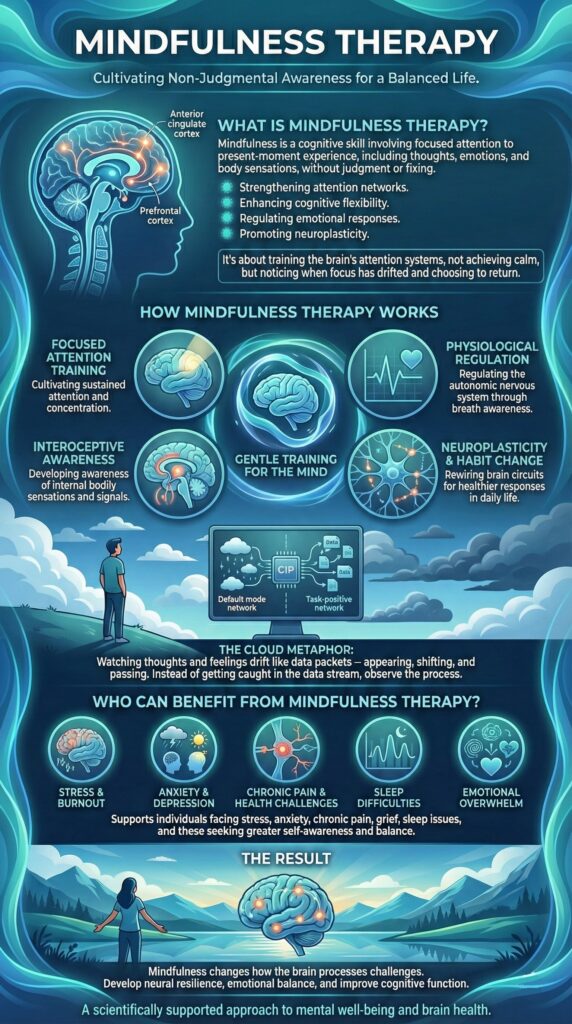
What is Mindfulness Therapy?
- Observing thoughts as mental events rather than absolute facts
- Noticing reactivity patterns without automatically following them
- Creating small moments of pause between experience and response
- Staying present with discomfort instead of immediately avoiding it
How Mindfulness Therapy Works
- Meditation: Bringing attention back to the present moment, again and again.
- Breathing Techniques: Using the rhythm of your breath to calm the nervous system.
- Body Scans: Developing awareness of physical sensations and releasing built-up tension.
- Everyday Awareness: Learning to bring mindfulness into daily activities, like eating, walking, or communicating.

Who Can Benefit from Mindfulness Therapy?
- Stress and burnout
- Anxiety and depression
- Chronic pain or health challenges
- Grief and loss
- Sleep difficulties
- Emotional overwhelm
- Desire for greater balance and self-awareness
The Result: Calm, Clarity, and Balance
Summary
Mindfulness Therapy From a Therapist Who Practises What He Teaches
If your brain never stops and you need to learn to be present without being overwhelmed, mindfulness-based therapy offers a way in. Clinical research, including landmark studies by Jon Kabat-Zinn and the developers of Mindfulness-Based Cognitive Therapy (MBCT), shows mindfulness interventions reduce anxiety and depression relapse by up to 44%.
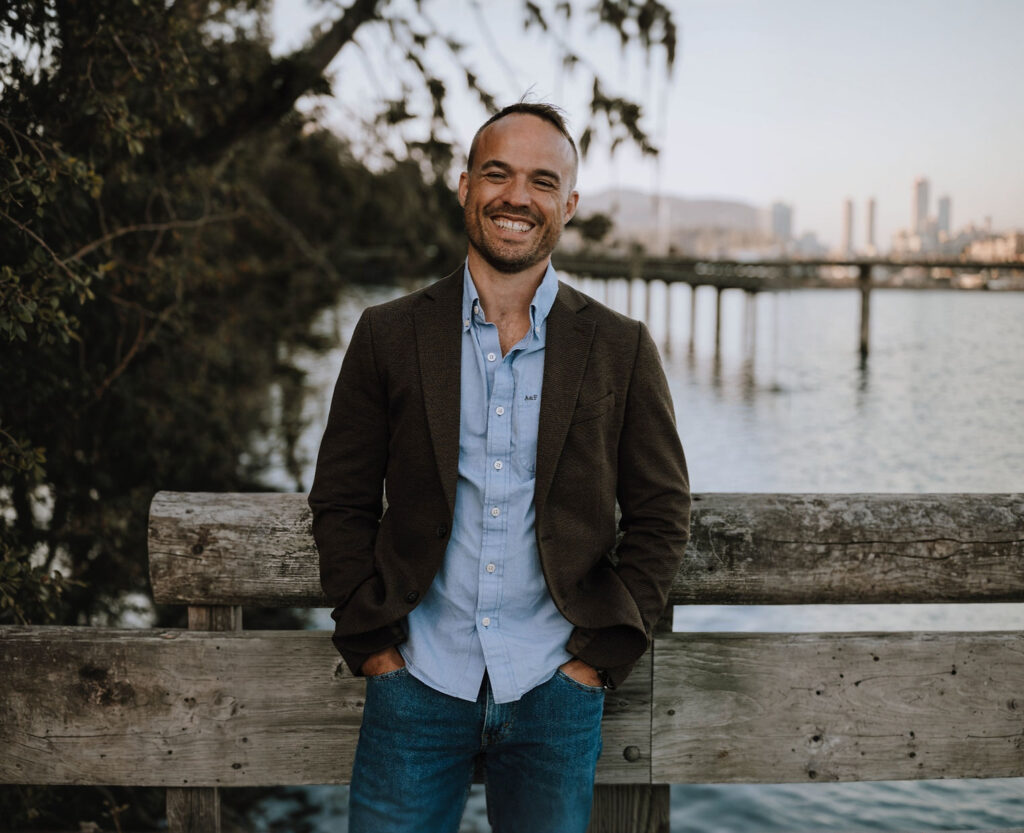
Sean Lewis does not teach mindfulness as a technique he memorized in a classroom. Trail running, backpacking, and kayaking on Vancouver Island are where his practice lives outside the therapy room. His military training demanded intense present-moment awareness under pressure. His Master of Divinity introduced contemplative spiritual traditions that predate clinical mindfulness by centuries.
Sean integrates mindfulness into Acceptance and Commitment Therapy (ACT) as a core process, helping you develop present-moment awareness and a non-judgmental stance toward your own experience. Whether you are looking for mindfulness for anxiety, mindfulness for depression, or techniques to stop living in the past and worrying about the future, the work is practical and grounded.
Sean offers mindfulness therapy in Victoria, BC, from his Colwood office, with virtual sessions across British Columbia. Sessions are covered by most extended health plans. Book a session.