

CVAP Counselling
If a crime hurt you, CVAP can fund up to 48 counselling sessions. I bill CVAP directly for your approved sessions.
Does CVAP pay for counselling?
Yes. BC's Crime Victim Assistance Program (CVAP) can pay for counselling after a crime in BC, for victims, their immediate family and some witnesses. A victim can be approved for up to 48 sessions, with more during court proceedings. CVAP decides who is eligible. CVAP pays only for what other coverage does not. If you have extended health or another plan for counselling, that plan is claimed first. Sean Lewis, a Canadian Certified Counsellor, offers CVAP counselling in Colwood and online across BC.
What can a crime leave behind?
A crime can leave its mark long after the day itself, whether it happened to you, to someone you love, or in front of you. Some reactions ease in the first few weeks and some last longer, and it is common to have more than one. Here are some of the most common.
Post-traumatic stress
In post-traumatic stress disorder (PTSD), a frightening event keeps coming back in memories or dreams, and the body stays braced for danger. A review of 16 studies looked at people treated in hospital after an injury from violence. Post-traumatic stress, acute stress (strong stress reactions in the first weeks) and depression all appeared, at rates that varied widely from study to study [1].
A larger review looked at studies that tracked post-traumatic stress through the first year after a traumatic event. After events no one intended, such as accidents, it tended to ease. After harm someone caused on purpose, it did not, and across those studies it became more common over the year [2]. So if it has not settled yet, that is not unusual, and it is not too late to get support. Counselling for trauma and PTSD gives you a steady place to work through it, at a pace you set.
Feeling on guard
After a crime, you may find yourself watching the door, startling at sounds, or avoiding places that used to be ordinary. One study followed 127 people for six months after a violent crime. Anxiety was linked with a lower quality of life, in both physical and psychological health [3].
Counselling for anxiety can help you settle the alarm that keeps going off, and plan for the places and moments that feel hardest.
Low mood, and the people around you
Low mood can follow a crime, along with less interest in the things you used to enjoy. In the same study, low mood and post-traumatic stress were linked with a lower quality of life. Feeling supported by the people around you was linked with a better one [3].
That is one reason counselling looks at your support as well as your symptoms. Who can you lean on, and what makes it hard to ask?
Grief, when someone was taken
When a crime takes someone you love, grief can arrive tangled with shock, anger and questions that have no good answer. Immediate family members can apply to CVAP for counselling of their own. Grief counselling makes room for all of it, without a timetable for how you should feel.
The Crime Victim Assistance Program sets and updates its own rules. The program details on this page were checked against the Government of British Columbia's CVAP pages in October 2026.


Who qualifies for CVAP counselling?
Victims, Family, and Witnesses
CVAP can fund counselling for victims of a crime in BC, their immediate family, and some witnesses. A victim can be approved for up to 48 sessions, a family member up to 36, and a witness up to 12.
No Charges Needed
You do not have to wait for charges to be laid, or for anyone to be convicted, before you apply. CVAP can pay benefits whether or not anyone is prosecuted. CVAP decides each application.
Billed Directly to CVAP
As a CVAP counsellor, I bill CVAP directly for your approved sessions. Before we start, we will look at your CVAP decision letter and any other coverage together. That way you know which sessions are covered, and whether any cost is left to you.
How does CVAP counselling work?
It starts with your application to CVAP. You can book a free call with me at any point.
Apply to CVAP
Send CVAP its application form. A local victim service program can give you a paper copy.
- Use the form for the date of the crime
- Send it by email, fax or mail
- Questions? Call CVAP at 1-866-660-3888
Interim sessions can start early
Once CVAP registers your application, up to 12 sessions may begin while it decides.
- For victims and immediate family, not witnesses
- I confirm CVAP's approval before we start
- These sessions count toward your total
Book a free 15-minute call
A short, free conversation to ask questions and see whether we are a good fit.
- Book it online
- Ask how CVAP billing works here
- We work out together whether this is a fit
Your first session
Bring your CVAP claim number. You tell me what brought you here, at your own pace.
- Have your CVAP claim number ready
- You tell me what brought you here
- I ask questions, and mostly I listen
- You decide what to share, and when
Reviews and more sessions
CVAP sets your number of sessions in its decision letter. Any request for more comes from you.
- CVAP generally awards the most sessions allowed
- Court proceedings can add more sessions
- If you got fewer sessions, you can ask for more
- CVAP may ask me for a progress report

Ready to start, with CVAP covering it?
The first step with me is a free call, and you do not need to know what to say. Ask how CVAP billing works here, or whether I am the right fit.
Ready to talk? A 15-minute conversation, no obligation.

Would you rather ask a question first?
Questions about CVAP counselling
Will I have to pay anything?
For sessions CVAP has approved, I bill CVAP directly. CVAP pays only for what other coverage does not. If you have extended health or another plan for counselling, CVAP's rule is that the plan is claimed first. CVAP may then cover eligible costs your plan does not.
What if I do not claim on my health plan?
CVAP lowers what it pays by what your plan would have paid, even if no claim is made. Say CVAP pays for sessions your plan would have covered. It can then ask you to pay that money back, or take it off your future benefits. So please tell CVAP and me about any plan you have. We will sort out the order together before we start.
What if claiming on my health plan feels unsafe?
Claiming on your plan might feel unsafe, for example because someone else holds the plan. If so, tell CVAP before your sessions begin and ask how they will handle it.
What if I miss or cancel a session?
Please cancel at least 24 hours ahead when you can. CVAP may pay for up to three missed sessions without that notice, counted against your approved sessions. After that, the cancellation policy applies.
How many sessions will CVAP cover?
The law sets the maximums: up to 48 counselling sessions for a victim, 36 for an immediate family member, and 12 for a witness. When there are criminal court proceedings, such as a trial or a sentencing hearing, CVAP can add up to 24, 18 or 12 more sessions. CVAP generally awards the maximum, and its decision letter tells you how many sessions you have.
What does CVAP learn about my counselling?
For billing, CVAP receives your name and claim number, the date and length of each session, my name and the fee. It asks for an intake report only in some cases, and it may ask for a progress report near the end of your approved sessions. If CVAP asks me for a report and you want to see what I send, I will share it.
Who counts as immediate family?
Under the Crime Victim Assistance Act, immediate family means the victim's spouse, child, grandchild, sibling, step-sibling, half-sibling, parent or grandparent. An immediate family member can be approved for up to 36 counselling sessions, plus up to 18 more during court proceedings. CVAP decides each application, so check with CVAP about your situation.
I saw a crime happen. Can I get counselling?
Possibly. For a crime on or after January 1, 2024, a witness must have been close by during the crime or its immediate aftermath. The crime must have caused a death or a life-threatening injury, in circumstances that would alarm, shock and frighten a reasonable person. Earlier crimes have stricter rules. A witness can be approved for up to 12 sessions, plus up to 12 more during court proceedings.
Do I have to report to police, or wait for charges?
You do not have to wait for charges, or for anyone to be convicted, before you apply. CVAP can pay benefits whether or not anyone is prosecuted. The law does let CVAP reduce or end a victim's benefits if the crime was not reported to police. Ask CVAP how that applies to you. Whether to report is your decision, and VictimLink BC can talk it through with you.
Does the crime have to have happened in BC?
Yes. CVAP covers crimes committed in British Columbia. It does not cover injury from a motor vehicle crash, which goes through ICBC, unless a vehicle was used in an assault. It also does not cover injury from a work incident covered by workers' compensation. If you are not sure whether CVAP applies to you, call CVAP at 1-866-660-3888.
What is CVAP counselling?
Crime Victim Assistance Program counselling, or CVAP counselling, is counselling that the program pays for after a crime in British Columbia. It is open to victims, their immediate family and some witnesses, and I bill CVAP directly. It can help with fear, low mood, grief and stress after a crime.
How long do I have to apply?
For a crime on or after January 1, 2024, CVAP must receive your application within 2 years; for an earlier crime, 1 year. For someone under 19, the limit starts when they turn 19. A victim of sexual assault, or of sexual misconduct while under 19, has no time limit; family members still have one. CVAP can extend the limit if you could not reasonably have applied in time.
Can I start before CVAP makes a decision?
Yes, if CVAP approves interim sessions. Once CVAP registers an application from a victim or immediate family member, it can fund up to 12 interim sessions while it gathers information. Before we start, I confirm CVAP has approved them. They count toward your total. If CVAP later turns the claim down, it still pays for the interim sessions held before its decision was delivered. Witnesses wait for CVAP's decision.
Can I do sessions online?
Yes. Sessions run in person at the Colwood office or by secure video anywhere in British Columbia. CVAP accepts counselling by video when we both agree it suits you. If going out still feels like too much, video lets you start from home.
What can counselling after a crime help with?
Fear, low mood, grief and stress can overlap after a crime. You do not need to sort out which is which before you reach out; that can be part of the work.
Trauma & PTSD
When what happened keeps replaying, and your body reacts as though it is happening again.
Anxiety
When you stay on alert, startle at small sounds, or avoid places you once went freely.
Grief & Loss
When a crime took someone you love, or took the life you had before.
Intrusive Thoughts
When your mind keeps looping through the same what-ifs and will not settle.
Relationships
When trust feels harder, and the people close to you do not know how to help.
Depression & Mood
When the things you used to enjoy have gone flat, and each day takes everything.
Who would you be working with?
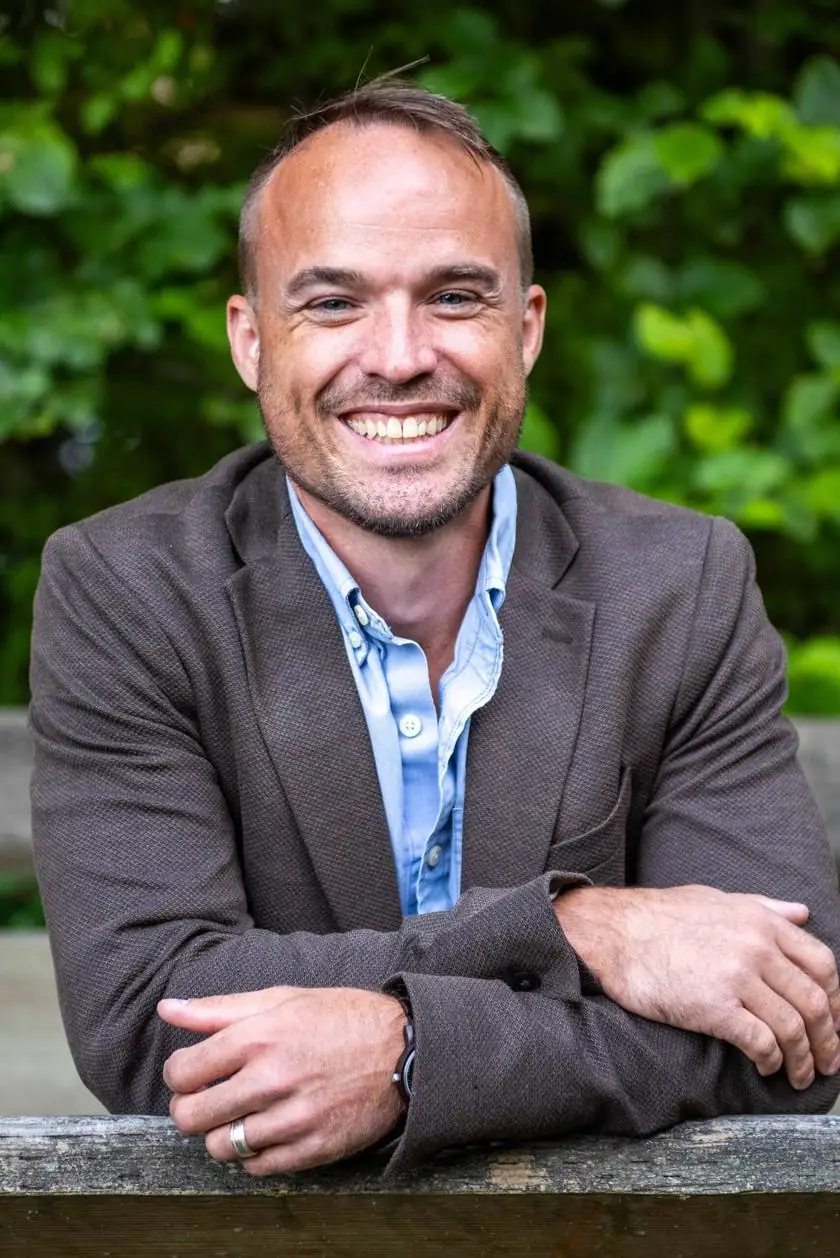
My name is Sean. I am a Canadian Certified Counsellor in Colwood, and I work with adults living with the effects of a crime, including family members and witnesses.
Sessions can focus on what the crime left you carrying, from broken sleep to feeling on guard in ordinary places. We can meet in Colwood or by secure video anywhere in BC, and you set the pace.
MDiv · MACP · DPC · CCC · CCPA member #11252849
References
- Ophuis, R. H., Olij, B. F., Polinder, S., & Haagsma, J. A. (2018). Prevalence of post-traumatic stress disorder, acute stress disorder and depression following violence related injury treated at the emergency department: A systematic review. BMC Psychiatry, 18, Article 311. https://doi.org/10.1186/s12888-018-1890-9
- Santiago, P. N., Ursano, R. J., Gray, C. L., Pynoos, R. S., Spiegel, D., Lewis-Fernández, R., Friedman, M. J., & Fullerton, C. S. (2013). A systematic review of PTSD prevalence and trajectories in DSM-5 defined trauma exposed populations: Intentional and non-intentional traumatic events. PLoS ONE, 8(4), e59236. https://doi.org/10.1371/journal.pone.0059236
- Lefebvre, C., Fortin, C., & Guay, S. (2021). Quality of life after violent crime: The impact of acute stress disorder, posttraumatic stress disorder, and other consequences. Journal of Traumatic Stress, 34(3), 526-537. https://doi.org/10.1002/jts.22623
If you are in danger, call 9-1-1. VictimLink BC answers any time at 1-800-563-0808. For a mental health crisis, call or text 9-8-8.
Counselling is not emergency care. I am a Canadian Certified Counsellor, not a physician or registered psychologist, so I do not diagnose or prescribe. CVAP decides who is eligible and how many sessions it funds; I do not.
CVAP Counselling in Colwood and Victoria, BC | Support for Victims of Crime
A crime can stay with you long after the day itself, whether it happened to you, to someone you love, or in front of you. Counselling for victims of crime gives you a steady place to work through what it left behind.
BC's Crime Victim Assistance Program (CVAP) can fund up to 48 counselling sessions for a victim. An immediate family member can be approved for up to 36, and some witnesses for up to 12, with more during court proceedings. You do not have to wait for charges or a conviction before you apply. CVAP decides who is eligible, and as a CVAP counsellor, I bill CVAP directly for your approved sessions.
I am Sean Lewis, a Canadian Certified Counsellor, and I work with adults. If you are looking for CVAP counselling in Victoria, my office is in Colwood, close to Langford, the Westshore and Victoria. Sessions also run by secure video anywhere in British Columbia.
Crime Victim Assistance Program counselling can work on trauma and PTSD, feeling on guard or anxious, low mood, grief when someone was taken, and thoughts that keep replaying. You decide what to share, and when.
If you were hurt in a car crash, ICBC counselling is usually the route instead. For local victim services and crisis lines, see Community Resources. When you are ready, book a free 15-minute consultation.