

ICBC Counselling
Twelve sessions are pre-authorized in the twelve weeks after your crash. No referral; I invoice ICBC, so they cost you nothing.
Credentials

Lived Experience
- 9 years ministry and counselling
- Infantry veteran
- Trades business owner

Academic Training
- Master's, Counselling Psychology
- Master's, Divinity
- Diploma, Professional Counselling

Professional Status
- Canadian Certified Counsellor
- Direct billing to ICBC
- CCPA member #11252849
Does ICBC cover counselling after a crash?
Yes. The Insurance Corporation of British Columbia (ICBC) pre-authorizes 12 counselling sessions in the first 12 weeks after a crash. You need your ICBC claim number and Personal Health Number, not a referral. ICBC's Recovery Network accepts Canadian Certified Counsellors. I invoice ICBC directly, so the sessions you attend cost you nothing. Sean Lewis, a Canadian Certified Counsellor, offers ICBC counselling in Colwood and online across BC.

Who would you be working with?
My name is Sean. I am a Canadian Certified Counsellor in Colwood, and I work with adults living with the effects of a crash.
Sessions can focus on what the crash has left you carrying, from nerves in traffic to memories that will not settle. We can meet in person in Colwood or by secure video anywhere in BC, and you set the pace.
- MDiv
- MACP
- DPC
- CCC
What do other clinicians say?

Ready to use your ICBC sessions?
The first step with me is a free call, and you do not need to know what to say. Ask how ICBC billing works here, or whether I am the right fit.
- Report Your Claim to ICBC
- Bring Your Claim Number
- 12 Sessions Pre-Authorized
Ready to talk? A 15-minute conversation, no obligation.
Where are you located?

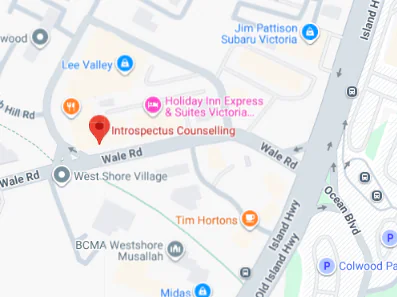
132-328 Wale Rd, Colwood, BC V9B 0J8
Phone: 250-556-4623
Email: sean@introspectuscounselling.ca
What can a car crash leave behind?

A crash can affect you in ways that do not show up on an X-ray. Some reactions ease in the first few weeks and some last longer, and it is common to have more than one. Here are some of the most common.
Post-traumatic stress
In post-traumatic stress disorder (PTSD), a frightening event keeps coming back in memories or dreams, and the body stays braced for danger. PTSD is one of the most common psychological effects of a crash [2]. One study followed people seen at a hospital emergency department after a crash. A year later, about a third reported at least one of these: post-traumatic stress, fear of travelling by car, general anxiety or depression [1].
Going over the crash again and again, and having little support, are both linked with PTSD developing later [2]. Counselling for trauma and PTSD gives you a steady place to work through the memory, at a pace you set.
Fear of driving or being a passenger
Driving anxiety can look like tensing up in traffic, avoiding the road where it happened, or panic in the passenger seat. In one study, fear of travelling by car was one of the problems people reported a year after a crash [1].
Sessions can draw on cognitive behavioural therapy, which works with the thoughts and habits that keep fear going.
Pain that will not settle
An Australian study followed more than 2,000 adults with minor to moderate injuries from traffic crashes. A year later, pain was still getting in the way of daily life for almost six in ten of them. Most of the people whose pain lingered did not have lasting low mood or post-traumatic stress. But when low mood or post-traumatic stress did last, pain was more likely to last as well [3].
Counselling does not replace medical care for pain. It works alongside your medical care. In counselling sessions you can learn practical pain management techniques, and get help with how pain affects your sleep, mood and plans. Acceptance and commitment therapy (ACT) is one approach I use; it can help you do more of what matters, even when pain is still there. Counselling can also help with the worry about what the pain means, and with coping when it flares.
Concussion and trouble thinking clearly
A concussion is a type of mild brain injury. Headaches, trouble concentrating, forgetfulness and tiredness can follow, so if you think you have one, get checked by a doctor or nurse practitioner. In a large Canadian study, almost a quarter of adults hurt in traffic crashes had a mild brain injury. Most had not been knocked out. Half said they had recovered within about 100 days, and more than three in four within a year [4].
Low mood and expecting a poor recovery were both linked with a slower recovery [4]. Medical care looks after the concussion itself. Counselling can help with the low mood, the worry, and the frustration when your thinking is slower than usual.
Low mood and worry
Recovery can take longer than you expected, and the things you used to enjoy may be out of reach for a while. In one study, depression and general anxiety were among the problems people reported a year after a crash [1]. An Australian study followed more than 2,000 people hurt in traffic crashes. For most of them, low mood and post-traumatic stress stayed mild or eased over the year [3].
Burnout from a long recovery
Appointments, forms, claim calls and time away from work can pile on top of the injury itself. Over a long recovery, that strain can wear you down. Counselling for stress and burnout can help you carry it.
ICBC sets and updates its own rules. The program details on this page were checked against ICBC's published guidance in September 2026.
What counselling can do about pain
Six things that come up when pain outlasts the repair.
Make room for pain
Some pain does not leave on schedule. Acceptance and commitment therapy works on the struggle with it rather than on the pain level itself. Across studies of acceptance and mindfulness based counselling, the clearest changes were in how much pain interfered with daily life, and in anxiety. Pain intensity moved less [6].
Question the worst case
After a crash it is normal to read every twinge as fresh damage. Cognitive behavioural therapy takes those readings seriously enough to test them. The Cochrane review of 75 studies found the average benefits for pain, disability and distress were small. That is worth saying plainly before you start [5].
Learn how pain works
Pain is a signal, and a signal can keep firing after the tissue has healed. Learning how that works does not turn the pain down by much, and the research says so. What it did shift was fear of movement, which is often the thing quietly shrinking a week [7].
Pace the day
Pacing means setting activity by a planned amount rather than by how the hour feels, so a good day does not cost the next three. The trial evidence for pacing on its own is mixed. So it is offered as a practical tool to work out together, not as a proven fix.
Work on sleep
Pain and short nights travel together. A review pooling 11 study populations found that sleep problems came with a higher risk of lasting musculoskeletal pain. Which way the arrow points is still unsettled [8]. Sleep gets its own place in the work rather than being left to sort itself out.
Take mood seriously
If low mood or post-traumatic stress has stayed with you too, it gets its own time in sessions. It is not brushed aside as a side effect of the pain, and it is not a sign the pain is in your head. The two are worked on side by side.
References (8) Each checked against Crossref by DOI
- Mayou, R., Bryant, B., & Ehlers, A. (2001). Prediction of psychological outcomes one year after a motor vehicle accident. American Journal of Psychiatry, 158(8), 1231-1238. https://doi.org/10.1176/appi.ajp.158.8.1231
- Heron-Delaney, M., Kenardy, J., Charlton, E., & Matsuoka, Y. (2013). A systematic review of predictors of posttraumatic stress disorder (PTSD) for adult road traffic crash survivors. Injury, 44(11), 1413-1422. https://doi.org/10.1016/j.injury.2013.07.011
- Pozzato, I., Craig, A., Gopinath, B., Kifley, A., Tran, Y., Jagnoor, J., & Cameron, I. D. (2020). Outcomes after traffic injury: Mental health comorbidity and relationship with pain interference. BMC Psychiatry, 20, Article 189. https://doi.org/10.1186/s12888-020-02601-4
- Cassidy, J. D., Boyle, E., & Carroll, L. J. (2014). Population-based, inception cohort study of the incidence, course, and prognosis of mild traumatic brain injury after motor vehicle collisions. Archives of Physical Medicine and Rehabilitation, 95(3), S278-S285. https://doi.org/10.1016/j.apmr.2013.08.295
- Williams, A. C. de C., Fisher, E., Hearn, L., & Eccleston, C. (2020). Psychological therapies for the management of chronic pain (excluding headache) in adults. Cochrane Database of Systematic Reviews, 8(8), Article CD007407. https://doi.org/10.1002/14651858.CD007407.pub4
- Veehof, M. M., Trompetter, H. R., Bohlmeijer, E. T., & Schreurs, K. M. G. (2016). Acceptance- and mindfulness-based interventions for the treatment of chronic pain: A meta-analytic review. Cognitive Behaviour Therapy, 45(1), 5-31. https://doi.org/10.1080/16506073.2015.1098724
- Watson, J. A., Ryan, C. G., Cooper, L., Ellington, D., Whittle, R., Lavender, M., Dixon, J., Atkinson, G., Cooper, K., & Martin, D. J. (2019). Pain neuroscience education for adults with chronic musculoskeletal pain: A mixed-methods systematic review and meta-analysis. The Journal of Pain, 20(10), 1140.e1-1140.e22. https://doi.org/10.1016/j.jpain.2019.02.011
- Runge, N., Ahmed, I., Saueressig, T., Perea, J., Labie, C., Mairesse, O., Nijs, J., & Malfliet, A. (2024). The bidirectional relationship between sleep problems and chronic musculoskeletal pain: A systematic review with meta-analysis. Pain, 165(11), 2455-2467. https://doi.org/10.1097/j.pain.0000000000003279
What does ICBC cover?
12 Sessions, Pre-Authorized
ICBC pre-authorizes 12 counselling sessions in the first 12 weeks, or 84 days, after a crash. Your first visit counts as one of them. If you need more care, I send ICBC a treatment plan, and ICBC decides.
How it works →No Referral, No Waiting
If you are looking for an ICBC counsellor, you do not need a referral from a family doctor or nurse practitioner. For your pre-authorized sessions, there is no ICBC approval to wait for. You will need your claim number and Personal Health Number (PHN).
Billed to ICBC, Not to You
For counselling covered by ICBC, I invoice ICBC directly, so there is nothing to pay at your appointment. I am not part of ICBC's claims team and make no decisions about your claim, but ICBC uses my reports to manage it.
Questions about cost →How does ICBC counselling work?

It starts with your ICBC claim, and most of the steps happen before your first session.
-
Report the crash to ICBC
Report online at any hour or by phone. Passengers, pedestrians and cyclists need to call.
- Online: 24 hours a day
- By phone: 1-800-910-4222, 8 a.m. to 8 p.m. daily
- Passengers, pedestrians and cyclists: report by phone
-
Get your claim number
Keep it handy. You will need it, with your PHN, to use your sessions.
- Keep your claim number somewhere easy to find
- Have your Personal Health Number (PHN) ready
- No referral or ICBC approval needed to start
-
Book a free 15-minute call
A short, free conversation to ask questions and see whether we are a good fit.
- Book it online
- Ask how ICBC billing works here
- We work out together whether this is a fit
-
Your first session
You tell me what brought you here, and afterward I send ICBC an initial report.
- Have your claim number and PHN ready
- You tell me what brought you here
- I ask questions, and mostly I listen
- Afterward, I send ICBC an initial report
-
After 12 sessions or 12 weeks
If more support would help, I send ICBC a treatment plan, and ICBC decides.
- The 12 sessions apply to the first 12 weeks
- I send ICBC a treatment plan for more care
- It goes in before your sessions run out
- ICBC decides whether to fund more sessions
What can counselling after a crash help with?
Fear, low mood, grief and stress can overlap after a crash. You do not need to sort out which is which before you reach out; that can be part of the work.

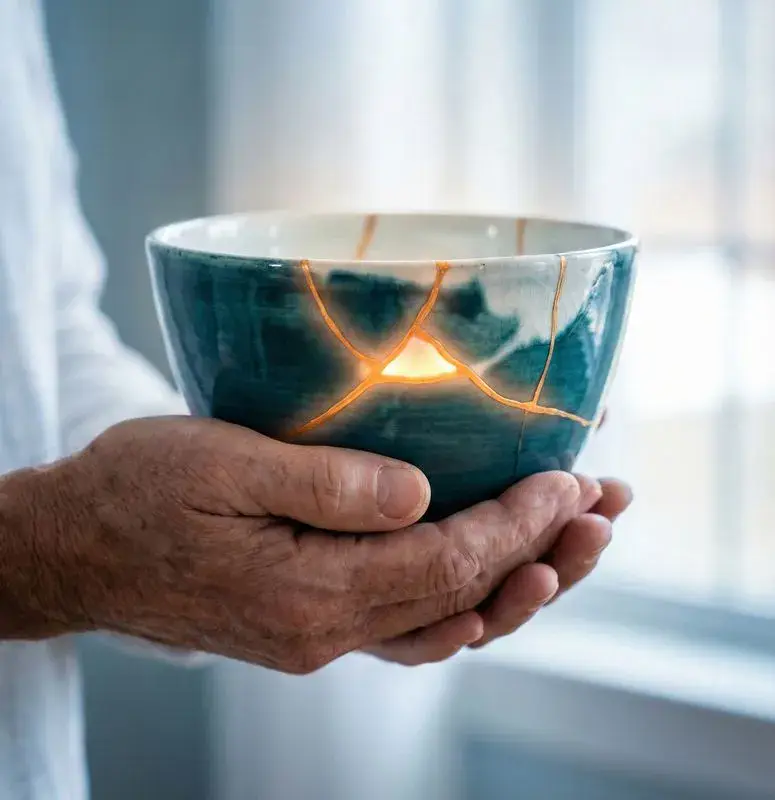
Trauma & PTSD
When the crash keeps replaying, and your body reacts as though it is happening again.
Explore Trauma & PTSD
Depression & Mood
When recovery drags on and the things you used to enjoy have gone flat.
Explore Depression & Mood
Grief & Loss
When you lost someone in the crash, or lost the way life was before it.
Explore Grief & Loss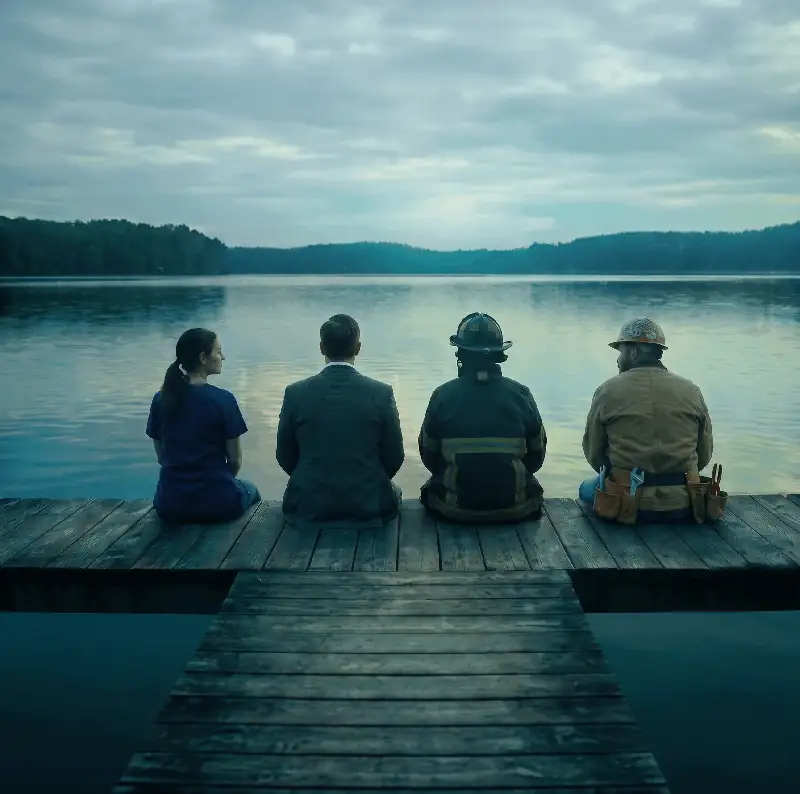
Stress & Burnout
When appointments, claim calls and missed work pile on top of everything else.
Explore Stress & Burnout
Intrusive Thoughts
When your mind loops through the same what-ifs and will not let the crash go.
Explore Intrusive ThoughtsQuestions about ICBC counselling
Does ICBC counselling cost me anything?
No. For sessions ICBC has authorized, I invoice ICBC directly, so there is nothing to pay at your appointment. The 12 sessions in the first 12 weeks after a crash are pre-authorized, so those are covered from your first visit. ICBC does not pay for missed or late-cancelled appointments, so the cancellation policy applies to those.
Cancellation and no-show policy →What happens after my 12 pre-authorized sessions?
If more counselling would help, I send ICBC a treatment plan before your approved sessions run out, and ICBC decides whether to fund more. Sessions after that point are covered only once ICBC approves them. If ICBC says no, the Fees, Billing and Insurance page sets out other ways to pay.
What does my counsellor tell ICBC?
After your first session, I send ICBC an initial report. It covers things like your symptoms, work and daily life, relevant mental health or substance use history, safety and goals. ICBC can ask for progress reports and session notes. I must tell ICBC if you stop taking part in counselling, and cannot leave out anything relevant to funding. If you want to see what I send, I will share it.
I was a passenger, a pedestrian, or on a bike. Am I covered?
Yes, if you live in BC. ICBC says any BC resident injured in a crash is entitled to care and recovery benefits, no matter who is responsible. That includes drivers, motorcycle riders, passengers, pedestrians and cyclists.
The crash was my fault. Can I still get counselling?
Yes. ICBC says fault does not affect the care you receive if you are injured. The pre-authorized sessions in the first 12 weeks apply no matter who was responsible. Guilt can pull you back to the moments before the crash, again and again. That is part of what we can work on together.
My crash was before May 2021. Does this still apply?
Talk to your ICBC claims representative. That is ICBC's advice for any claim from before May 1, 2021, when Enhanced Care, its care-based auto insurance model, came into effect. If ICBC will not pay for counselling, the Fees, Billing and Insurance page sets out other ways to pay.
Someone close to me died in the crash. Can I get counselling?
Yes, if you are an immediate family member. ICBC offers support for grief counselling when a crash results in a death. That support has its own ICBC page, separate from the injury sessions described here, so check with ICBC about what applies to you. Grief after a sudden loss is part of the work I do.
ICBC's page on grief support after a death →What is ICBC counselling?
It is counselling that ICBC, British Columbia's public auto insurer, pays for when you are hurt in a crash. ICBC pre-authorizes 12 sessions in the first 12 weeks, and counsellors in its Recovery Network bill ICBC directly. It can help with fear, low mood, grief and stress after a crash.
Do I need a doctor's referral?
No. ICBC says you do not need a referral from a family physician or nurse practitioner, or approval from ICBC, for your pre-authorized sessions. You will need your Personal Health Number and your ICBC claim number, and you can book the free call yourself.
Do I need a psychologist, or can I see a counsellor?
Either can help with fear, low mood and stress after a crash. ICBC lists 12 pre-authorized sessions for a psychologist and 12 for a counsellor in the first 12 weeks, and neither needs a referral. One key difference is diagnosis: psychologists can diagnose, and I do not. If you need a formal diagnosis, see a psychologist, doctor or nurse practitioner. ICBC's Recovery Network accepts Canadian Certified Counsellors.
What do I need for my first session?
For ICBC, you will need your claim number and your Personal Health Number (PHN). You do not need to have your thoughts in order before you arrive. If we are meeting by video, a private spot where you will not be overheard makes it easier to talk. Plan for at least 50 minutes.
Can I do sessions online?
Yes. Sessions run in person at the Colwood office or by secure video anywhere in British Columbia. If travel is hard while you recover, or getting into a car still feels like too much, video lets you start from home.
Online counselling across BC →Would you rather ask a question first?

Other ways counselling gets paid for
Counselling covered by ICBC is one way in. If it does not fit your situation, start here.
