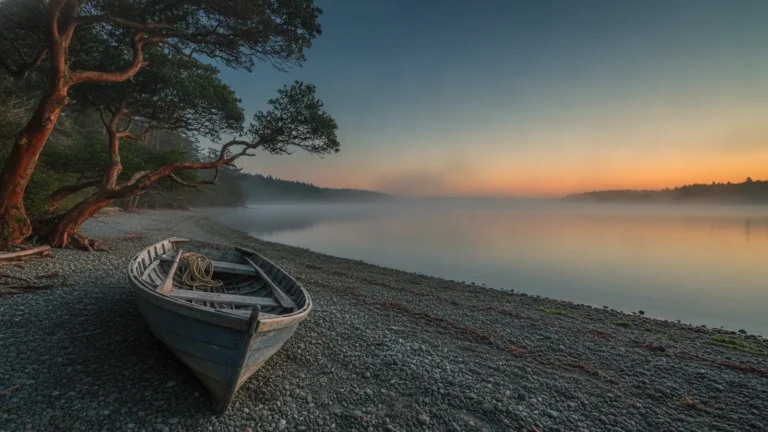
By Christmas, the sun won’t rise in Colwood until after nine in the morning. On 1 November, BC didn’t fall back; the province moved to permanent daylight time [1]. We kept an extra hour of evening light and gave away an hour of morning light. Nobody consulted the mornings.
Keeping daylight time didn’t cause the slowdown many of us feel in November; that shows up every year. But this winter the early bird gets the dark, and that matters, because light is a big part of the story, and of the answer. The ordinary slowdown eases with more daylight and less blaming yourself for it. For a smaller number of people it’s seasonal depression, which needs treatment of its own. Accept the season; treat the depression.
On this page
Before you read on, make a guess. Does living further north make seasonal depression more likely?
The mechanism It’s the light, not the cold
Your body runs on an internal clock of roughly a day, and light keeps it on time. Bright light in the morning sets the clock earlier, so you get sleepy sooner at night and mornings come easier. Bright light late in the evening sets it later, so you stay up later and mornings drag [2]. So with light, timing matters, not just the amount. In winter there’s less of it to go around. And where do most of us spend the bright hours? Indoors, where light is far dimmer than it looks. Light meters measure brightness in lux. Even a heavily overcast day gives about 1,000 lux outdoors, while most offices sit around 300 to 500 [3]. When Danish researchers clipped small light meters to more than 500 workers, the indoor workers averaged less than 1,000 lux through winter working hours [4]. Indoors all day, you get less light than even a heavy grey sky gives.
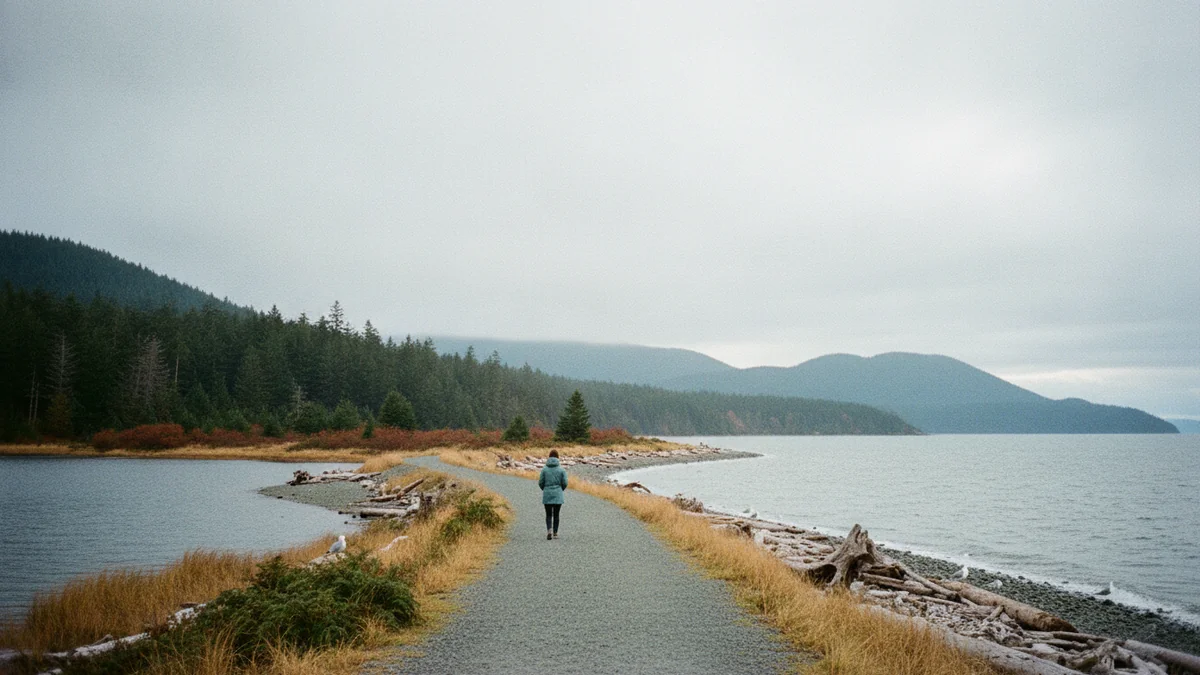
For some people the clock drifts late through the winter. Their body starts releasing melatonin, its night signal, too late for the hours they sleep, so when the alarm goes off, their body still acts as if it’s earlier than it is. In one study, about 7 in 10 people with winter depression had a clock running late like this, and shifting it earlier helped [5]. And you can act on it: what moves a late clock earlier is bright light early in your day [2].
You can also see light’s pull by adding more of it. When a small team in Colorado took five people camping for a week around the winter solstice, their daytime light went up about thirteenfold, and their body clocks shifted more than two and a half hours earlier [6]. Five people is a tiny study, but it points to one plain answer to the winter slog: more time outside.
The ordinary part Some of it is the season
Most of us feel the seasons. The US National Institute of Mental Health describes it this way: “Many people feel ‘down’ or have the ‘winter blues’ when the days get shorter in the fall and winter and feel better in the spring when longer daylight hours return” [7]. In a 1989 phone survey in Maryland, about 9 in 10 people said their mood or energy shifted with the seasons. That’s nearly everyone. About 1 in 4 said the shift was a problem for them [8], but far fewer have seasonal depression: about 1 adult in 40 at some point in life, in an Ontario survey of about 1,600 adults [9]. For most people, it’s sleeping a little more, wanting heavier food and having less get-up-and-go in the dark months.
Where a lot of us go wrong is treating that ordinary slowdown as a failure. We tell ourselves we should feel like it’s July. We don’t, so disappointment piles on top of the tiredness. Acceptance and Commitment Therapy has a gentler suggestion: let the season be the season, and decide what matters to you inside it, with earlier nights and a slower pace if that’s what it asks. Henry David Thoreau wrote much the same in his journal in 1853: “Live in each season as it passes; breathe the air, drink the drink, taste the fruit, and resign yourself to the influences of each” [10]. By resign he meant giving yourself over to the season, not giving up on it.
An old line in the Bible puts it simply: “There is a time for everything, and a season for every activity under the heavens” (Ecclesiastes 3:1, NIV). Some of what November asks of you is rest. As requests go, it’s not a hard one to like: a longer night, a heavier blanket, a pot of soup that takes all afternoon. The Portuguese have a saying, a noite é boa conselheira: the night is a good counsellor. November gives you plenty of night to consult.
“Shouldn’t I just push through it?” Partly; it depends what you push against. Pushing against how you feel, by sheer effort, is by definition not restful. Keeping your plans and getting outside anyway, gently, is something else, and that part helps.
When it’s more Some of it is seasonal depression
Seasonal depression is a depression that arrives with the dark months and lifts in spring, year after year. The psychiatrist Norman Rosenthal and his colleagues described it in 1984. Their patients slept more, ate more and craved carbohydrates, on top of the low mood [11]. Depression in general rises in winter, too: for every 10 Canadians depressed in August, about 17 were depressed in January [12].
How do you tell an ordinary slowdown from seasonal depression? The ordinary slowdown leaves you yourself, just slower. Seasonal depression takes things away. If, most days for two weeks or more, you’ve lost interest in what usually matters to you, you feel hopeless or worthless, your sleep and appetite swing hard, or getting through work and home feels beyond you, that’s worth taking to someone. The free PHQ-9 depression self-check is a good first step. It’s a screen, not a diagnosis. In a large review it caught about 9 in 10 people who were depressed, and it also flagged some people who weren’t [13]. A high score means it’s time to talk to someone, and so does a low one if you’re still worried. Your family doctor is a good next stop, and so is counselling for depression. If you’d like to talk it through with me, you can book a session here.
The evidence What helps this winter
The best-studied treatment is bright light. Canada’s mood-disorder guideline lists light therapy as a first-line treatment for winter depression, meaning one of the first to try. The usual dose is a 10,000-lux light box for about 30 minutes soon after waking [14]. When researchers pool more studies, its edge over a dummy treatment shrinks, but it doesn’t disappear [15] [16]. And light isn’t only for depression. In small studies, people with milder winter blues, short of depression, felt better with bright light [17] [18]; in one, people with no winter dip at all didn’t change [17]. If your mood sinks with the season, light is worth a try.
Light is a treatment, so check that it’s safe for you first. Bright light can tip some people with bipolar disorder toward mania, an unusually high, driven mood, and some eye conditions and medications that make you sensitive to light can rule it out or call for an eye exam first [19]. If you have reason to be concerned, talk to a doctor before you buy a lamp.
If you do buy one, check three things on the light box or its listing: 10,000 lux at a stated distance, a UV filter, and plain white light rather than blue [20]. A lux number with no distance tells you nothing. Sit where the maker says you get the full 10,000, with the box a little above eye level and angled down, and keep your eyes open without staring into it [20] [21]. Two that publish those numbers (10,000 lux at about 30 to 35 cm) are the Canadian-made Northern Light BOXelite and the Carex Day-Light Classic Plus. These aren’t affiliate links.
The light box has one catch, and Kelly Rohan, a psychologist at the University of Vermont, named it by comparing it with blood pressure pills, which work only while you keep taking them. “Light therapy is a palliative treatment, like blood pressure medication, that requires you to keep using the treatment for it to be effective,” she said. “Adhering to the light therapy prescription upon waking for 30 minutes to an hour every day for up to five months … can be burdensome” [22]. Her team tested it against cognitive behavioural therapy (CBT) for seasonal depression, a structured talk therapy built around winter that includes planning things to enjoy. In the winter of treatment the two tied: about half of each group got well [23]. The winter after, they still looked about the same. Two winters on, depression had come back for about 1 in 4 of the CBT group, against nearly 1 in 2 of the light group [24], and most of the light group had stopped using their lamps [22].
Why did CBT last longer? Rohan’s team looked for the reason, and one change stood out. People who had CBT changed how they thought about winter, light and weather more than the light group did, and that change seems to be what carried them through later winters [25]. Think of the way you think about winter as an inner forecast. It tends to say the same few things: nothing good happens until spring; a grey day is a wasted day. A grey day feeds the forecast, and the forecast makes the next grey day heavier. CBT can’t change the weather. It can change the forecast.
A study from Norway points the same way. The researchers Kari Leibowitz and Joar Vittersø surveyed 238 people, from the south up to the Arctic island of Svalbard. People who saw winter as something to enjoy, not just endure, reported feeling better in themselves, and that outlook was more common further north. They call mindset “a previously overlooked factor of seasonal wellbeing” [26]. Scandinavians have a saying for it: there’s no bad weather, only bad clothing. So what’s your own forecast saying about this November?
And vitamin D? In the largest trial, taking it didn’t prevent depression. In that trial of more than 18,000 adults aged 50 and over, followed for about five years, about 13 in every 1,000 people a year became depressed whether they took vitamin D or a dummy pill [27]. If you’re already depressed, or a blood test shows you’re low, ask your doctor whether to take it.
This winter adds a wrinkle to the light advice. The usual advice is light soon after waking. But from mid-November to mid-February the sun rises between about twenty past eight and just after nine, so a lot of us are up for an hour or two before there’s any daylight to get. A light box at breakfast still works. Outdoors, the brightest time you can reach may be the middle of the day. Raymond Lam, the University of British Columbia psychiatrist who helped write the Canadian guideline, said it in one line: “a noon walk is a very good idea in the winter time” [28].
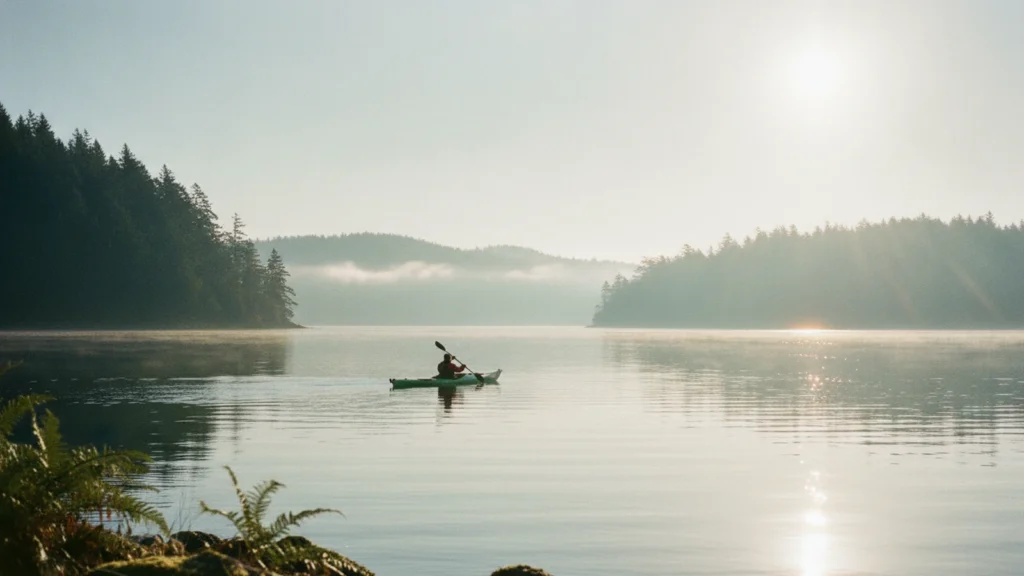
Here’s what getting out looks like in my own November. When there’s sun, I go and get in it. I go trail running, I go kayaking, and the best spot I know is out on the water with no shade anywhere. You don’t need a kayak, though; a walk at lunch gets you under the same open sky. On grey days I go anyway. Andrew Huberman, the Stanford neuroscientist, makes the case for that: get outside “even on a cloudy day,” because the light out there is “absolutely brighter than indoor light” [29].
Why the water? Because there’s no shade out there: the whole sky is open to you. On a sunny winter day the water adds more, because calm water reflects far more light from a low sun than from a high one, and in December even the noon sun sits low over Colwood. Calm water reflects about 3 parts in 100 when the sun is high, and as much as 45 in 100 when the sun sits just above the horizon [30]. So out on the water, you get light from above and below. Dress for the water, not the air, though: wear a wetsuit or drysuit.
A trail gives you more than light. Norwegians have a word for getting out like this: friluftsliv, literally “free-air life”, time outdoors in every season, for its own sake. When Stanford researchers sent people on 90-minute walks, those who walked in nature, rather than along a busy road, came back brooding less [31]. In Poland, 15 minutes in a city forest in winter left young adults calmer and livelier than 15 minutes in a built-up part of the city [32]. And remember those Colorado campers: a week outdoors moved their body clocks more than two and a half hours earlier [6]. Light, movement and green, on one trail.
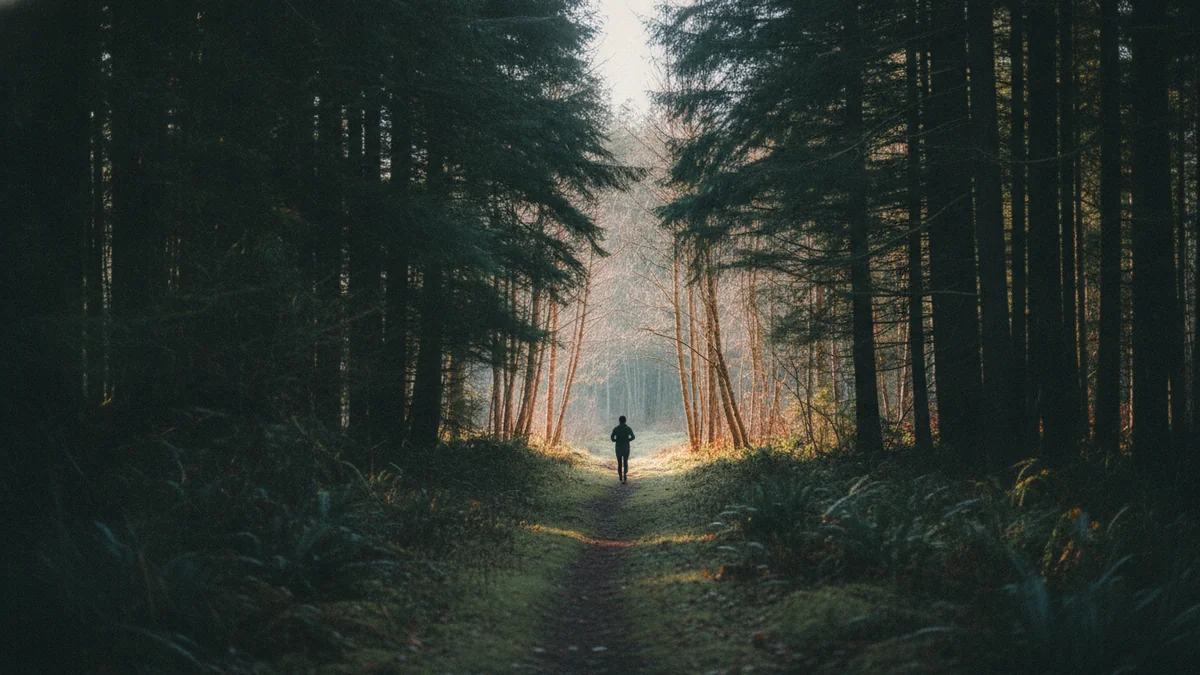
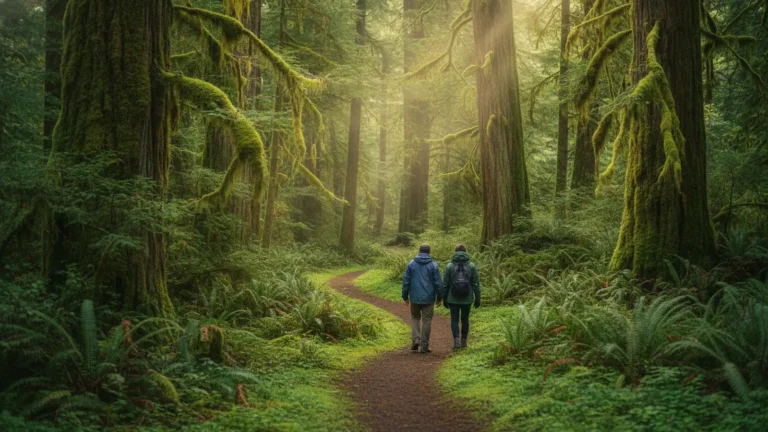
On grey and rainy days, head into the trees. An old-growth Douglas-fir and hemlock canopy catches about a quarter of the rain before it reaches the ground [33], so you stay drier under it. And the good a forest does you doesn’t wait for sunshine. Forest bathing is the Japanese practice of spending slow, unhurried time among trees, and a review of 20 studies found it eased anxiety and other symptoms in the short term [34]. In a Polish study run under a fully clouded sky, young women’s mood lifted after time in a snow-covered forest, while time on a city street left them tenser [35]. So when the sky stays grey, take your winter slowdown for a walk in the forest.
In practice A plan for the darkest three months
None of this needs a prescription. Five things, from mid-November to mid-February:
- Get open-sky light every day. Make hay while the sun shines, except in November the sunshine is the hay: when the sun comes out, drop what can wait and go out in it. On grey days, go anyway; even a heavy grey sky gives two or three times the light of most offices [3]. Aim for daylight soon after you’re up; if you leave for work before sunrise, take it at noon. Don’t count the commute: for many of us these months, it happens before sunrise. And a day behind glass still adds up to less light than a grey sky gives [3] [4].
- Catch dawn and dusk when you can. The mornings do get one thing back this winter: you’re awake for sunrise. A Korean proverb says dawn comes even if you strangle the rooster: you can’t stop it coming. This winter it simply comes later, so it’s easier to catch than it’s been in years. The late-afternoon light before sunset is worth stepping into too; it comes hours before bed, and the light that pushes the clock later is mostly light late in the evening and at night [2]. Huberman recommends light soon after waking and again in the late afternoon [36]. The morning half has solid science behind it [2]; no study I could find tests the late-afternoon half, so treat that as a pleasant way to close the working day.
- Keep sleep habits simple. Bright days, dim evenings, a dark bedroom [37]. Have caffeine early. Late in the day it does more than keep you up. In a small lab study, about a double espresso’s worth taken three hours before bed pushed the body clock about 40 minutes later, nearly half as much as bright evening light did in the same study [38]. A large dose, about four cups of coffee’s worth (400 mg), still disturbed sleep when taken six hours before bed [39]. Skip alcohol close to bedtime, since it breaks up the second half of the night [39].
- Keep the same wake time, weekends included. A steady wake time is one habit sleep treatments insist on [39], and it gives your body clock one fixed point while the light keeps shifting.
- Put something on the calendar. Plan things you’ll look forward to, on purpose, before the dark makes them feel optional. It’s one of the parts of CBT for seasonal depression [23]. Winter traditions are the same idea, handed down: Advent candles, Lucia Day in Sweden on 13 December, a standing Sunday soup with friends, a walk to see the neighbourhood lights. As the saying goes, it’s better to light a candle than to curse the darkness. This year, add a tradition or two. The dark makes them easy to skip, and that’s exactly why they’re worth keeping.
Take this further: download Sleep Hygiene Habits, a free, cited sheet that walks through the habits from morning to bedroom, with seven things to try when sleep won’t come.
Habits like these help a rested body stay rested, but on their own they don’t treat insomnia. If your sleep has been broken for months, the treatment with the strongest evidence is CBT for insomnia, a version of CBT built around sleep; sleep specialists strongly recommend it [40].
Review Putting it back together
November gets to us largely through the light, and this winter an hour of morning light has moved to the evening. Most of the slowdown is ordinary, and it weighs less when you get more daylight and stop treating it as failure. For some people it’s seasonal depression, which takes things away rather than just slowing you down, and which responds to bright light, CBT, medication and the care of a doctor or counsellor. Outdoors, open sky and water give you the most light, a trail gives you light, movement and green together, and on a rainy day the forest still does you good.
So, back to your guess from the start: does living further north make seasonal depression more likely? Not by much, it turns out. That Ontario survey found the rate didn’t climb from south to north [9]. One major review suggests latitude matters less than climate, genes and culture [41]. Here’s my guess at a simpler reason: in a national survey, Canadians spent almost 90% of their time indoors [42], and under a ceiling, every town sits at the same latitude. That’s good news, because wherever you live, the first step is the same: get out from under the ceiling.
Quick check, no scrolling: at what time of day does light pull your body clock earlier?
If what you’re feeling is more like burnout than weather, my post on the prophet Elijah’s burnout, where the first remedy was sleep and food, is the better read.
And if your November sounds more like losing interest in things than slowing down, that’s work I do. Counselling for depression and low mood is one place to start, in Colwood or online anywhere in BC.
The poet Anne Bradstreet, writing in the 1660s, saw something in the dark months worth keeping: “If we had no winter the spring would not be so pleasant: if we did not sometimes taste of adversity, prosperity would not be so welcome” [43]. So when the sun does come out this month, go and get in it. Let the rest of the winter be winter, and if it’s more than the season, don’t wait for spring to get help. In a crisis, call or text 9-8-8 any time.
Educational content; not a substitute for therapy. If you’re working through something significant, consider connecting with a counsellor or your family doctor.
References
- Government of British Columbia. (2026, September 17). B.C.’s new time zone (Pacific time). https://www2.gov.bc.ca/gov/content/governments/celebrating-british-columbia/daylight-saving-time
- Khalsa, S. B., Jewett, M. E., Cajochen, C., & Czeisler, C. A. (2003). A phase response curve to single bright light pulses in human subjects. The Journal of Physiology, 549(3), 945-952. DOI:10.1113/jphysiol.2003.040477
- Arendt, J. (2012). Biological rhythms during residence in polar regions. Chronobiology International, 29(4), 379-394. DOI:10.3109/07420528.2012.668997
- Daugaard, S., Markvart, J., Bonde, J. P., et al. (2019). Light exposure during days with night, outdoor, and indoor work. Annals of Work Exposures and Health, 63(6), 651-665. DOI:10.1093/annweh/wxy110
- Lewy, A. J., Lefler, B. J., Emens, J. S., & Bauer, V. K. (2006). The circadian basis of winter depression. Proceedings of the National Academy of Sciences, 103(19), 7414-7419. DOI:10.1073/pnas.0602425103
- Stothard, E. R., McHill, A. W., Depner, C. M., et al. (2017). Circadian entrainment to the natural light-dark cycle across seasons and the weekend. Current Biology, 27(4), 508-513. DOI:10.1016/j.cub.2016.12.041
- National Institute of Mental Health. (2023). Seasonal affective disorder. U.S. Department of Health and Human Services, National Institutes of Health. Retrieved October 27, 2026, from https://www.nimh.nih.gov/health/publications/seasonal-affective-disorder
- Kasper, S., Wehr, T. A., Bartko, J. J., Gaist, P. A., & Rosenthal, N. E. (1989). Epidemiological findings of seasonal changes in mood and behavior: a telephone survey of Montgomery County, Maryland. Archives of General Psychiatry, 46(9), 823-833. DOI:10.1001/archpsyc.1989.01810090065010
- Levitt, A. J., & Boyle, M. H. (2002). The impact of latitude on the prevalence of seasonal depression. The Canadian Journal of Psychiatry, 47(4), 361-367. DOI:10.1177/070674370204700407
- Thoreau, H. D. (1906). The writings of Henry David Thoreau: Journal V (B. Torrey, Ed., p. 394). Houghton Mifflin. (Journal entry of August 23, 1853.) https://archive.org/details/writingsofhenryd11thorrich
- Rosenthal, N. E., Sack, D. A., Gillin, J. C., et al. (1984). Seasonal affective disorder: a description of the syndrome and preliminary findings with light therapy. Archives of General Psychiatry, 41(1), 72-80. DOI:10.1001/archpsyc.1984.01790120076010
- Patten, S. B., Williams, J. V. A., Lavorato, D. H., Bulloch, A. G. M., Fiest, K. M., Wang, J. L., & Sajobi, T. T. (2017). Seasonal variation in major depressive episode prevalence in Canada. Epidemiology and Psychiatric Sciences, 26(2), 169-176. DOI:10.1017/S2045796015001183
- Levis, B., Benedetti, A., & Thombs, B. D. (2019). Accuracy of Patient Health Questionnaire-9 (PHQ-9) for screening to detect major depression: individual participant data meta-analysis. BMJ, 365, l1476. DOI:10.1136/bmj.l1476
- Lam, R. W., Kennedy, S. H., Adams, C., et al. (2024). Canadian Network for Mood and Anxiety Treatments (CANMAT) 2023 update on clinical guidelines for management of major depressive disorder in adults. The Canadian Journal of Psychiatry, 69(9), 641-687. DOI:10.1177/07067437241245384
- Golden, R. N., Gaynes, B. N., Ekstrom, R. D., et al. (2005). The efficacy of light therapy in the treatment of mood disorders: a review and meta-analysis of the evidence. American Journal of Psychiatry, 162(4), 656-662. DOI:10.1176/appi.ajp.162.4.656
- Pjrek, E., Friedrich, M.-E., Cambioli, L., et al. (2020). The efficacy of light therapy in the treatment of seasonal affective disorder: a meta-analysis of randomized controlled trials. Psychotherapy and Psychosomatics, 89(1), 17-24. DOI:10.1159/000502891
- Kasper, S., Rogers, S. L., Yancey, A., Schulz, P. M., Skwerer, R. G., & Rosenthal, N. E. (1989). Phototherapy in individuals with and without subsyndromal seasonal affective disorder. Archives of General Psychiatry, 46(9), 837-844. DOI:10.1001/archpsyc.1989.01810090079011
- Avery, D. H., Kizer, D., Bolte, M. A., & Hellekson, C. (2001). Bright light therapy of subsyndromal seasonal affective disorder in the workplace: morning vs. afternoon exposure. Acta Psychiatrica Scandinavica, 103(4), 267-274. DOI:10.1034/j.1600-0447.2001.00078.x
- Geoffroy, P. A., Palagini, L., et al. (2025). Light therapy for bipolar disorders: clinical recommendations from the International Society for Bipolar Disorders (ISBD) Chronobiology and Chronotherapy Task Force. Dialogues in Clinical Neuroscience, 27(1), 249-264. DOI:10.1080/19585969.2025.2533806
- Center for Environmental Therapeutics. (n.d.). How to select a light box. Retrieved October 26, 2026, from https://cet.org/how-to-select-a-light-box/
- Mayo Clinic Staff. (2022, March 30). Seasonal affective disorder treatment: Choosing a light box. Mayo Clinic. Retrieved October 26, 2026, from https://www.mayoclinic.org/diseases-conditions/seasonal-affective-disorder/in-depth/seasonal-affective-disorder-treatment/art-20048298
- Wakefield, J. R. (2015, November 5). Talk outshines light in preventing return of winter blues, says new UVM study. University of Vermont. https://www.uvm.edu/uvmnews/news/talk-outshines-light-preventing-return-winter-blues-says-new-uvm-study
- Rohan, K. J., Mahon, J. N., Evans, M., Ho, S. Y., Meyerhoff, J., Postolache, T. T., & Vacek, P. M. (2015). Randomized trial of cognitive-behavioral therapy versus light therapy for seasonal affective disorder: acute outcomes. American Journal of Psychiatry, 172(9), 862-869. DOI:10.1176/appi.ajp.2015.14101293
- Rohan, K. J., Meyerhoff, J., Ho, S. Y., Evans, M., Postolache, T. T., & Vacek, P. M. (2016). Outcomes one and two winters following cognitive-behavioral therapy or light therapy for seasonal affective disorder. American Journal of Psychiatry, 173(3), 244-251. DOI:10.1176/appi.ajp.2015.15060773
- Rohan, K. J., Burt, K. B., Norton, R. J., Perez, J., Iyiewuare, P., & Terman, J. M. (2023). Change in seasonal beliefs mediates the durability advantage of cognitive-behavioral therapy over light therapy for winter depression. Behavior Therapy, 54(4), 682-695. DOI:10.1016/j.beth.2022.11.002
- Leibowitz, K., & Vittersø, J. (2020). Winter is coming: Wintertime mindset and wellbeing in Norway. International Journal of Wellbeing, 10(4), 35-54. DOI:10.5502/ijw.v10i4.935
- Okereke, O. I., Reynolds, C. F., Mischoulon, D., et al. (2020). Effect of long-term vitamin D3 supplementation vs placebo on risk of depression or clinically relevant depressive symptoms and on change in mood scores: a randomized clinical trial. JAMA, 324(5), 471-480. DOI:10.1001/jama.2020.10224
- Petz, S. (2025, December 21). Winter blues got you down? Here’s what experts say could help. CBC News, as syndicated by The Weather Network. https://www.theweathernetwork.com/en/news/lifestyle/health/winter-blues-got-you-down-heres-what-experts-say-could-help
- Huberman, A. (Host). (2021, October 25). Dr. Samer Hattar: Timing light, food, & exercise for better sleep, energy & mood [Podcast episode]. Huberman Lab. https://www.hubermanlab.com/episode/dr-samer-hattar-timing-light-food-exercise-for-better-sleep-energy-mood
- Payne, R. E. (1972). Albedo of the sea surface. Journal of the Atmospheric Sciences, 29(5), 959-970. DOI:10.1175/1520-0469(1972)029<0959:AOTSS>2.0.CO;2
- Bratman, G. N., Hamilton, J. P., Hahn, K. S., Daily, G. C., & Gross, J. J. (2015). Nature experience reduces rumination and subgenual prefrontal cortex activation. Proceedings of the National Academy of Sciences, 112(28), 8567-8572. DOI:10.1073/pnas.1510459112
- Bielinis, E., Takayama, N., Boiko, S., Omelan, A., & Bielinis, L. (2018). The effect of winter forest bathing on psychological relaxation of young Polish adults. Urban Forestry & Urban Greening, 29, 276-283. DOI:10.1016/j.ufug.2017.12.006
- Link, T. E., Unsworth, M., & Marks, D. (2004). The dynamics of rainfall interception by a seasonal temperate rainforest. Agricultural and Forest Meteorology, 124(3-4), 171-191. DOI:10.1016/j.agrformet.2004.01.010
- Kotera, Y., Richardson, M., & Sheffield, D. (2022). Effects of shinrin-yoku (forest bathing) and nature therapy on mental health: a systematic review and meta-analysis. International Journal of Mental Health and Addiction, 20(1), 337-361. DOI:10.1007/s11469-020-00363-4
- Bielinis, E., Łukowski, A., Omelan, A., Boiko, S., Takayama, N., & Grebner, D. L. (2019). The effect of recreation in a snow-covered forest environment on the psychological wellbeing of young adults: randomized controlled study. Forests, 10(10), 827. DOI:10.3390/f10100827
- Huberman, A. (2021, September 20). Toolkit for sleep. Huberman Lab newsletter. https://www.hubermanlab.com/newsletter/toolkit-for-sleep
- Brown, T. M., Brainard, G. C., Cajochen, C., et al. (2022). Recommendations for daytime, evening, and nighttime indoor light exposure to best support physiology, sleep, and wakefulness in healthy adults. PLOS Biology, 20(3), e3001571. DOI:10.1371/journal.pbio.3001571
- Burke, T. M., Markwald, R. R., McHill, A. W., Chinoy, E. D., Snider, J. A., Bessman, S. C., Jung, C. M., O’Neill, J. S., & Wright, K. P., Jr. (2015). Effects of caffeine on the human circadian clock in vivo and in vitro. Science Translational Medicine, 7(305), 305ra146. DOI:10.1126/scitranslmed.aac5125
- Irish, L. A., Kline, C. E., Gunn, H. E., Buysse, D. J., & Hall, M. H. (2015). The role of sleep hygiene in promoting public health: a review of empirical evidence. Sleep Medicine Reviews, 22, 23-36. DOI:10.1016/j.smrv.2014.10.001
- Edinger, J. D., Arnedt, J. T., Bertisch, S. M., et al. (2021). Behavioral and psychological treatments for chronic insomnia disorder in adults: an American Academy of Sleep Medicine clinical practice guideline. Journal of Clinical Sleep Medicine, 17(2), 255-262. DOI:10.5664/jcsm.8986
- Mersch, P. P. A., Middendorp, H. M., Bouhuys, A. L., Beersma, D. G. M., & van den Hoofdakker, R. H. (1999). Seasonal affective disorder and latitude: a review of the literature. Journal of Affective Disorders, 53(1), 35-48. DOI:10.1016/S0165-0327(98)00097-4
- Leech, J. A., Wilby, K., McMullen, E., & Laporte, K. (1996). The Canadian Human Activity Pattern Survey: report of methods and population surveyed. Chronic Diseases in Canada, 17(3-4), 118-123. PMID:9097012
- Bradstreet, A. (1867). Meditations divine and morall, XIV. In J. H. Ellis (Ed.), The works of Anne Bradstreet in prose and verse (p. 51). Abram E. Cutter. (Written 1664; spelling modernised.) https://archive.org/details/worksofannebrads00brad